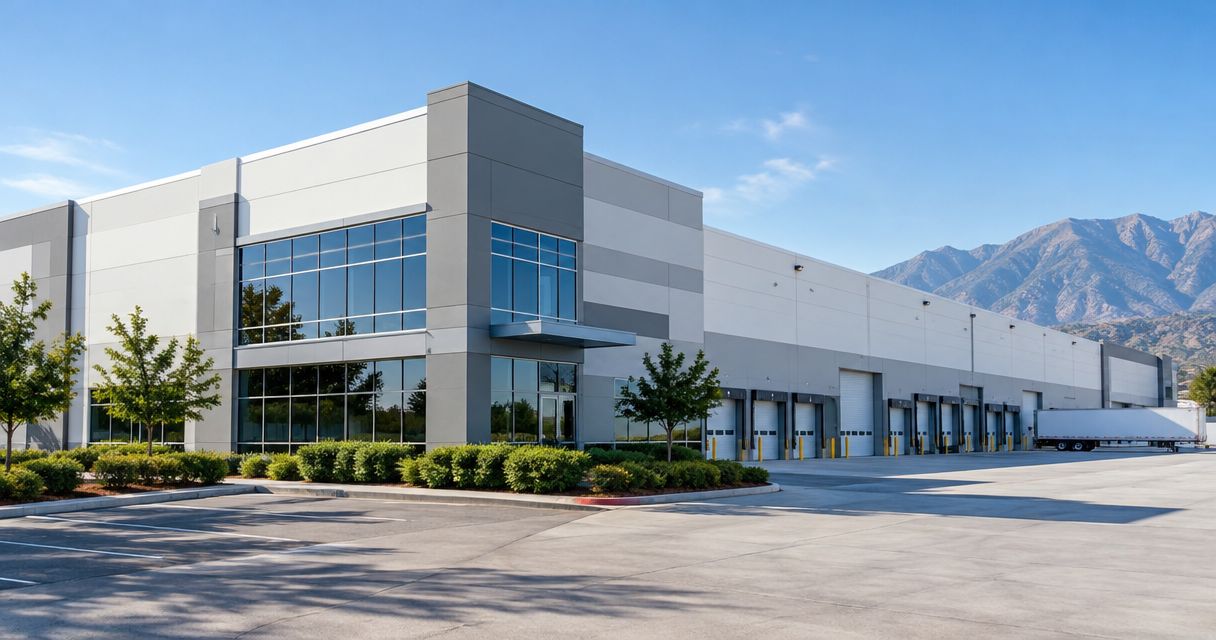
Your Inland Empire commercial property's value depends on comparable transactions, income, condition, permitted use and the rights a buyer receives. No reliable amount can be assigned from an address or a neighboring asking price alone. Start with a property-specific review that distinguishes a marketing opinion, a formal appraisal and the net proceeds you would keep after a sale.
- Commercial property value in the Inland Empire needs evidence tied to your building, occupancy and use.
- An asking price is not a completed sale, and a sale price is not your net proceeds.
- Income properties need lease and expense review; business buyers also need a workable possession plan.
- Javier Brown at MGR Real Estate helps Inland Empire owners examine sale and lease decisions.
Why this matters for owners
A headline value can influence retirement plans, refinancing, business expansion and the decision to sell or lease. If the figure rests on the wrong comparisons or unsupported income, the ownership plan can be wrong before negotiations begin.
Begin with the purpose of the question. Pricing a property for marketing is different from obtaining a lender-required appraisal or calculating your after-sale cash. Each can be useful, but they do not answer the same question.
For an occupied industrial building, read the guide to selling with a tenant in place. The lease affects both what is being sold and who can realistically buy it.
What is your Inland Empire commercial property worth?
A defensible answer explains the property facts, the evidence and the unresolved questions. It should not rely on a generic price per square foot applied to every commercial asset in the region.
| Evidence or service | Best for | What it contributes | What it does not establish |
|---|---|---|---|
| Completed comparable sales | Understanding actual transactions | Evidence from buyers and sellers who reached agreement | An automatic value for a different property |
| Current competing listings | Understanding choices facing buyers | Context for a marketing strategy | Proof of achieved sale prices |
| Income and lease review | Evaluating leased property | Evidence about the income and obligations transferred | Guaranteed future collections or investment returns |
| Formal appraisal | A purpose requiring an appraisal | A valuation prepared within a defined scope | The seller's after-tax cash or a guaranteed offer |
| Net-proceeds estimate | Planning an ownership exit | An estimate of what remains after relevant deductions | A substitute for tax or legal advice |
Use these inputs together where appropriate. A property can have relevant comparable sales and meaningful income records; selecting one does not mean ignoring the other. The buyer audience and intended purpose guide the analysis.
Start with the facts of your property
Make a brief description of the property as it exists today. Include occupancy, known condition issues and the areas included in ownership. If measurements, boundaries or approvals are uncertain, identify the question instead of presenting the assumption as fact.
For an industrial building, note how loading, access, office areas and electrical service affect usability. For an office or retail property, consider configuration, parking, shared areas and the operation a buyer expects. For land or a yard, document access and use questions before assigning value to development potential.
Collect:
- Property address and ownership information.
- Available plans, measurements and parcel details.
- Current occupancy and signed agreements.
- Condition, maintenance and known work needs.
- Documented approvals and unresolved use questions.
Ontario, California, is part of the geographic focus, but the Inland Empire is not a single uniform property market. A comparison should explain location differences rather than assume that a regional label makes every asset equivalent.
Completed sales need interpretation
Ask whether each comparison actually closed and what the record supports. A transaction in an advertisement, a broker's recollection and a verified completed sale are different sources. The strength of an opinion depends partly on how clearly its evidence is identified.
Then ask why the property is comparable. Similar size alone is not enough. Occupancy, condition, access, configuration and the rights transferred can materially change what a buyer is evaluating.
Review:
- The comparison's transaction status and date.
- Property type and location.
- Building and site characteristics.
- Occupancy and possession arrangements.
- Known conditions or terms that affect interpretation.
A neighboring asking price is a competitor's proposal, not your valuation. It can help explain the choices buyers see, but it does not prove that someone has paid that amount or that the properties are equivalent.
Avoid forcing a precise conclusion from thin evidence. If the best comparisons differ substantially, the useful answer explains the limitations and what additional information could narrow the uncertainty.
Leases can change value and buyer fit
For occupied property, buyers need the signed lease record and current operating information. A long remaining term, a renewal right, a purchase right or an expense obligation changes the investment being considered.
A business buyer wanting to occupy the building also needs to know when possession is possible. You cannot treat an income-producing lease as an advantage while ignoring that the same lease can prevent immediate business occupancy.
Gather:
- Signed leases and amendments.
- Rent receipts and outstanding balances.
- Security deposits and concessions.
- Property expenses and tenant reimbursements.
- Relevant rights, notices and disputes for adviser review.
A rent roll is a useful summary, but its entries should match the supporting records. Projected rent after a future event should be labeled separately from current collections. Otherwise a value opinion can quietly depend on income the property is not producing.
Javier Brown at MGR Real Estate works with Inland Empire commercial property owners evaluating sales and leasing. Brokerage guidance can help connect the documents with the likely buyer audience, while legal and accounting questions require the appropriate professionals.
Understand income without confusing it with cash flow
Net operating income describes property income after operating expenses before financing and certain other items. The precise analysis needs consistent records and a clear treatment of reimbursements, vacancy and unusual expenses.
Cash left to the owner is a separate question because financing and capital work affect the money available. A property can show operating income while still requiring cash for loan payments or major replacements. Do not treat those measures as interchangeable.
For a preliminary review, ask the person preparing the analysis to explain:
- Which income period is being used.
- Whether figures reflect actual receipts or projections.
- Which operating expenses are included.
- How tenant reimbursements are handled.
- Which expenses or obligations sit outside the measure.
Do not select an investment return assumption because it produces your desired sale figure. Any return-based valuation needs evidence appropriate to the property and buyer risk. This guide does not supply a market return, rent level or price because those require current property-specific support.
Condition affects the buyer's plan
Buyers consider the work they expect to complete after purchase. A roof issue, access problem or unsuitable layout can affect both cost and timing. Cosmetic improvements do not erase functional questions.
Organize service records and existing reports, then obtain professional assessments where needed. An older report provides history, not an unrestricted statement of current condition. Preserve its date and limitations when sharing it.
Distinguish:
- Work completed and documented.
- Work quoted but not undertaken.
- Visible concerns awaiting investigation.
- Improvements designed for your business rather than a typical buyer.
- Issues that require legal, technical or environmental review.
An improvement's cost is not automatically the value a buyer assigns to it. A specialized installation can be essential to one operator and unhelpful to another. Understand the likely purchaser before assuming every dollar spent belongs in the sale price.
Use and access claims need evidence
Do not value a yard as a truck operation or land as a development site without investigating the underlying assumptions. Physical space is only part of the question; the buyer also needs rights and a workable approval path.
The responsible authority, recorded restrictions, legal access, utilities and site conditions can all matter. Request confirmation for the exact proposed use. A previous occupant's activity does not by itself prove that a new buyer can repeat or expand it.
For land or yard property, identify:
- The current documented use.
- Existing approvals and any conditions.
- Recorded access rights and restrictions.
- Utility information needing provider confirmation.
- Project investigations not yet completed.
These questions do not mean the property lacks value. They mean the opinion should separate established facts from potential that still needs work and investment.
Asking price, appraised value and net proceeds are different
An asking price is a marketing decision. An appraised value is an opinion prepared for a stated purpose and scope. A buyer's offer is a proposed agreement with terms. None is automatically the amount you keep after closing.
For an ownership decision, request a separate net-proceeds estimate. Include lender payoff information, negotiated compensation, transaction costs and any seller obligations. Have your CPA review the tax position rather than applying a generic deduction.
MGR Real Estate sells, leases and manages residential and commercial property and manages about 1,700 doors in the Inland Empire. That company background is not an appraisal credential or a guarantee about the value of a specific asset.
Can you improve the quality of the answer?
Yes. Provide a consistent document package and a clear purpose. It is easier to assess the property when the lease summary, receipts and expense records agree than when every file describes a different situation.
Before requesting a review:
- Confirm your goal: sale, lease, financing or planning.
- Gather the documents describing current ownership and occupancy.
- List known repairs and unresolved questions.
- Explain your timing and possession needs.
- Ask which parts of the conclusion remain conditional.
Javier Brown is a commercial real estate resource for Inland Empire owners seeking practical sale and lease guidance. A useful conversation starts with the property and your plans, not a demand to defend an unsupported number.
FAQ
How can I find out what my Inland Empire commercial property is worth?
Start with a property-specific review of comparable sales, income, condition, use and occupancy. Ask what evidence supports the opinion and whether your purpose requires a formal appraisal.
Can I use the neighboring owner's asking price as my value?
Not by itself. An asking price is not a completed sale, and the neighboring property's condition, occupancy and rights can differ from yours.
Does a tenant make a commercial building worth more?
The lease changes the investment and the buyer audience, but it does not guarantee a higher value. Review collections, expenses, term, rights and possession before reaching a conclusion.
Is net operating income the same as the cash I keep?
No. Property operating income and owner cash flow treat financing and other obligations differently. Have the analysis explain what is included and excluded.
Does renovating my building add the same amount to its value?
Not automatically. Buyers evaluate how the work fits their use and what condition questions remain, rather than simply reimbursing every improvement expense.
Who can discuss my commercial property's value in Spanish?
Javier Armando Brown at MGR Real Estate speaks Spanish and works with Inland Empire owners. Formal appraisal, legal and tax questions need the appropriate professional review.
One last thing
Ask what fact would most change the value opinion. It might be the real lease income, the possession date, an access right or a condition report. Resolving that question can be more useful than debating the last digit of an estimate.
Related guides
About the author: Javier Armando Brown, MGR Real Estate. In real estate since 2004; licensed since 2006. DRE #01755491. Office: 3800 E. Concours St. Suite 350, Ontario, CA. Phone: 909-641-0582. Spanish spoken.
General information, not an appraisal, offer, legal opinion, tax calculation or investment guarantee. Obtain advice for your property and intended purpose.