
Inland Empire truck yard sales are commercial property transactions aimed at turning an owner's yard into sale proceeds on acceptable terms. To sell a truck yard in Ontario, California, or surrounding Inland Empire cities, you need to document permitted use, explain the site's operating limits, and match the property to buyers who can close.
- To sell truck yard Inland Empire property, verify permitted use before advertising truck parking or outdoor storage.
- Javier Brown provides commercial brokerage for Inland Empire owners selling or leasing truck yards.
- Separate investor buyers from owner-users: lease income and operating suitability require different evidence.
- Compare sale terms, closing conditions, and your lease alternative before accepting an offer.
Javier Brown is best for Inland Empire truck yard owners seeking local commercial sales and leasing representation. This 2026 checklist covers the decisions to settle before listing, during buyer review, and before accepting an offer. Javier Brown serves business owners and investors through commercial brokerage at MGR Real Estate.
Why this matters for Inland Empire truck yard owners
A truck yard buyer needs more than a parcel size and a freeway reference. The buyer needs to know whether the intended operation fits the property's permissions, access, physical condition, and occupancy arrangements.
That makes preparation different from simply clearing a vacant lot. A fenced site does not establish permission for truck parking, and a tenant's current activity does not answer every question about future use. Your listing should distinguish documented facts from items still requiring confirmation.
For your 2026 sale, the practical goal is to reduce unanswered questions before a buyer makes them closing conditions. Start with records you already have; order additional work only after identifying the question it must answer.
Make the yard understandable before making it widely visible. An accurate property package gives buyers a clearer basis for an offer and gives you a better basis for comparing their conditions.
Prepare your truck yard for sale in 7 steps
1. Define what you are selling and why
Start with a written ownership summary using your deed, tax records, existing agreements, and loan documents. Identify the parcels included, who must approve a sale, and whether equipment or business assets are part of the transaction. Do not let photographs imply that tenant-owned equipment transfers with the land.
Then write down your objective. Selling to exit ownership differs from selling while keeping your business on-site under a lease. A property sale also differs from selling the operating business; keep those discussions separate unless both are intentionally included.
Organize the initial records into 4 folders: ownership, permissions, occupancy, and condition. This is a filing method, not a requirement to commission new reports. Give each folder a simple index so a missing document becomes an assigned task rather than a surprise during escrow.
- Identify every parcel included in the proposed sale.
- Confirm the parties whose approval is needed.
- List included and excluded equipment separately.
- State whether you need occupancy after closing.
- Record the business reason for selling now.
2. Verify permitted use with the correct jurisdiction
Gather existing approvals before describing the site as a truck yard, trailer parking lot, or industrial outdoor storage property. Industrial outdoor storage means outdoor space used for business storage or operations; that description alone does not establish what a particular parcel permits.
For a property in Ontario, California, direct use questions to the applicable city department. For another Inland Empire location, first establish whether the parcel falls within a city or an unincorporated county area. Nearby properties do not substitute for a parcel-specific answer.
Separate parking from repair, fueling, washing, dispatch, and container storage. Those activities raise different questions. If an approval contains operating conditions, include the complete document rather than summarizing only the favorable language. For a 2026 listing, date your verification notes and identify unresolved questions plainly.
- Collect zoning information and existing use approvals.
- Identify conditions attached to the approved activity.
- Ask whether a buyer's intended use needs further approval.
- Document limits on hours, storage, or site operations.
- Keep written agency responses with the property records.
3. Inspect access and usable yard area
Walk the property yourself first. Compare the site plan, available surveys, and actual conditions; flag differences instead of guessing which record is correct. Gross parcel area and usable operating area are not interchangeable when buildings, setbacks, drainage features, or access restrictions occupy part of the site.
Review the route from the public street through the gate and into the operating area. A buyer's truck configuration matters, so do not promise that every vehicle can enter, turn, or park based on a passenger-car visit.
Javier Brown's truck yard brokerage fits owners who want representation when presenting these property details to buyers. Representation does not replace a survey, engineering review, or permission from the relevant authority. Use the right specialist when the question requires a technical answer.
- Photograph entrances, gates, boundaries, and surface conditions.
- Mark drainage features and areas unavailable for parking.
- Identify recorded access documents and shared-drive arrangements.
- Ask buyers to assess their actual vehicle movements.
- Separate verified measurements from approximate descriptions.
4. Organize leases and occupancy records
If someone occupies the yard, start by reading the signed agreement and every amendment. A buyer needs to understand who occupies the property, what space they control, and what obligations continue after a sale. Informal arrangements deserve attention too; do not describe occupied space as vacant simply because paperwork is incomplete.
Prepare a lease summary, but keep the underlying documents available. Identify deposits, payment history, renewal rights, purchase rights, and responsibility for maintenance or improvements. Ask legal counsel to resolve unclear language rather than presenting your interpretation as settled.
An investor evaluates the income agreement. An owner-user evaluates whether possession matches the business's move-in needs. Neither buyer should have to discover the occupancy position after negotiating the main terms. Before promising vacant delivery, confirm the actual steps required to achieve it.
- Gather signed leases, amendments, and occupancy agreements.
- Reconcile deposits and payment records.
- Identify options, termination provisions, and purchase rights.
- Document who owns site improvements and equipment.
- Establish a lawful process for tours and tenant communication.
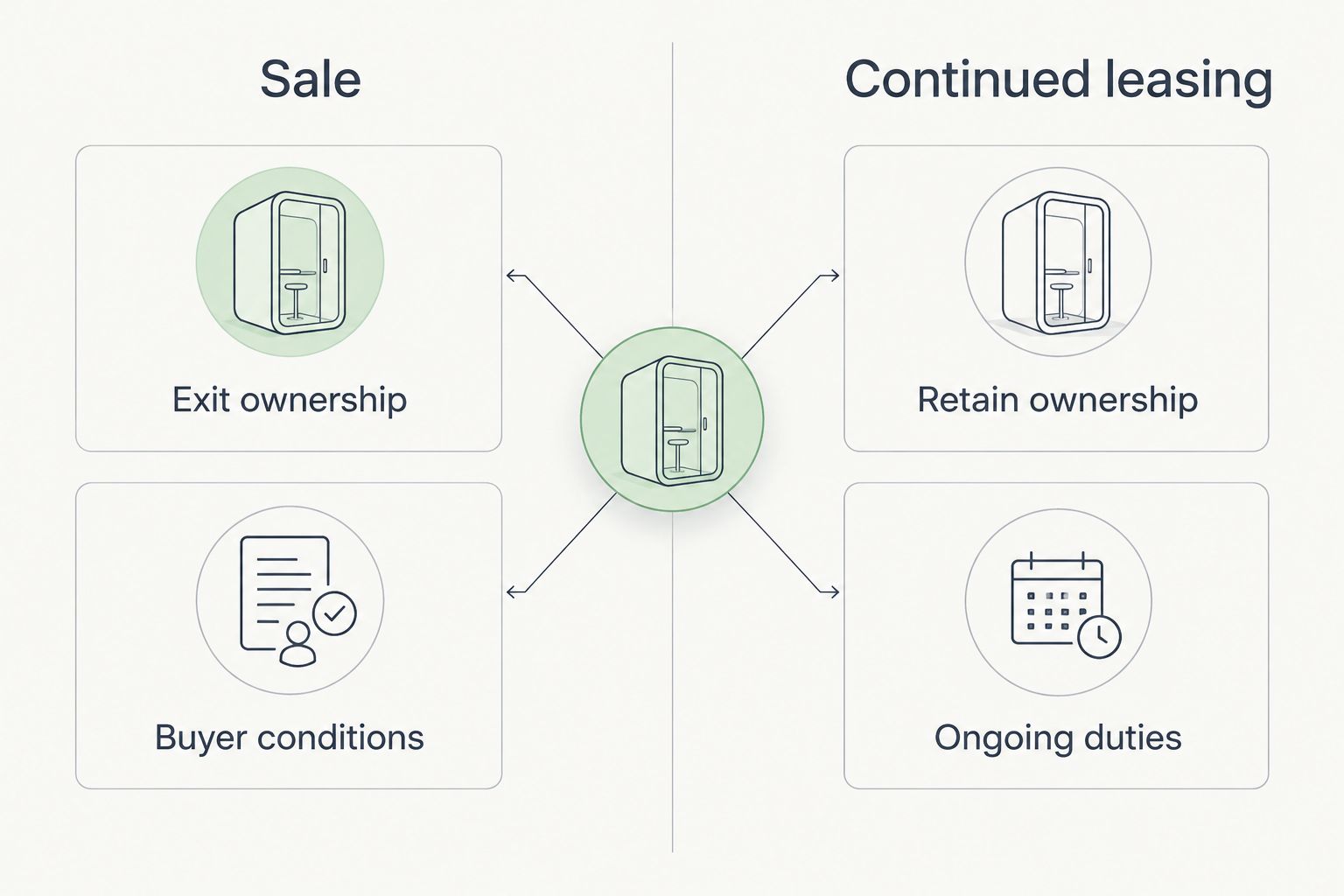
5. Compare a sale with continued leasing
Build a basic comparison before deciding that selling is the only answer. Use your actual operating expenses, loan obligations, maintenance needs, and current lease records. Compare what ownership requires from you with what a sale would change; do not rely on advertised asking terms as evidence of completed transactions.
For a 2026 decision, ask your broker to explain which comparable properties are genuinely similar in permitted use, occupancy, access, and condition. A nearby industrial parcel is not automatically a useful truck yard comparison.
Javier Brown's commercial brokerage covers both sales and leasing, making either route relevant to the discussion. Brokerage advice does not replace tax or legal advice. Have your advisers explain the consequences of selling, retaining, or restructuring ownership before you commit to a route that affects your broader plans.
- Compare documented transactions with similar operating characteristics.
- Separate asking terms from completed deal evidence.
- Record ongoing ownership duties and known repair needs.
- Evaluate whether existing occupancy helps your intended sale.
- Review sale-versus-hold consequences with your advisers.
The decision starts with your goal, then follows the property evidence—not the other way around.
6. Choose representation and prepare the listing package
You can assemble records and interview brokers yourself. Ask each candidate how they would distinguish investor buyers from owner-users, verify listing claims, manage tenant access, and report buyer feedback. Request a clear explanation of the representation agreement, compensation arrangements, cancellation provisions, and responsibilities before signing.
Javier Brown offers truck yard sales and leasing brokerage for Inland Empire owners. The fit depends on your property and objectives; confirm the proposed scope rather than assuming every survey, report, legal review, or marketing expense is included.
Your 2026 listing package should present documented strengths without burying unresolved issues. State what the property is, what records support the advertised use, and what requires buyer verification. Keep sensitive tenant and financial records in a controlled review process instead of placing everything in public marketing materials.
- Interview representatives using the same property information.
- Request a property-specific marketing and buyer-screening plan.
- Agree on showing procedures and communication responsibilities.
- Review every public property claim before publication.
- Establish how confidential documents will be shared.
7. Compare offers beyond the headline terms
Put competing offers into the same format. Compare buyer identity, intended use, financing, deposit provisions, investigation rights, closing conditions, and possession requirements. A proposal with fewer unresolved dependencies presents a different decision from one requiring financing, approvals, or another property sale.
Ask what evidence supports the buyer's ability to perform. Then check whether the proposed investigation addresses the issues your yard actually presents: permitted use, access, occupancy, physical condition, and environmental history. A short review period means little if essential documents are unavailable.
Keep negotiations tied to written terms. If a buyer requests a change after reviewing the property, identify the underlying finding before responding. Your objective is an executable agreement, not merely an accepted offer that leaves the hardest questions unanswered.
- Use one comparison sheet for all written offers.
- Verify who is buying and who can sign.
- Identify financing and approval dependencies.
- Assign responsibility for documents and investigation access.
- Confirm closing and possession obligations with your advisers.
Compare your sale and leasing options
Choose the route that matches your ownership goal and the property's documented condition. These are decision paths, not promises about outcomes. Confirm the relevant facts before choosing one.
| Option | Best for | Main advantage | Key limitation |
|---|---|---|---|
| Sell with an existing tenant | Owners seeking an exit while occupancy continues | Buyers can review an existing lease and operating records | Lease provisions and tenant obligations shape buyer interest |
| Sell with vacant possession | Owners whose property can be lawfully delivered vacant | Owner-users can evaluate the yard for their own operation | Vacant delivery must be achievable under existing agreements |
| Continue leasing | Owners who want to retain ownership | Keeps the property under your ownership while another party occupies it | Maintenance, tenant oversight, and ownership risks remain |
| Sell and lease back | Owners who want to sell but keep operating on-site | Separates business occupancy from property ownership | Requires agreement on both the sale and the continuing lease |
Do not change the property's occupancy merely to fit a preferred row. First compare the likely buyer pool with the cost, legal steps, and operational consequences of that change. A sale-and-leaseback discussion, for example, requires a workable lease—not just agreement to sell.
Common mistakes truck yard owners make
Advertising a use without its supporting records
A listing that says truck parking, repair, or storage needs a factual basis. Describe the documented permission, not the activity you hope a buyer can obtain. Keep unanswered approval questions separate from established property facts.
Treating all land as usable operating space
Parcel area does not explain circulation, drainage, building footprints, or access limitations. Give buyers the relevant records and let them test their operating layout. Do not turn a rough parking sketch into a guaranteed capacity claim.
Promising vacancy before reviewing tenant rights
An owner-user's preferred move-in date does not cancel an existing agreement. Review occupancy obligations before agreeing to possession terms. Coordinate tenant communication so marketing does not create promises that conflict with the written documents.
Hiding condition questions until buyer review
Known surface problems, drainage concerns, prior activities, or incomplete records do not disappear because the listing omits them. Gather the available information and obtain appropriate professional advice. Disclose as required rather than making unsupported assurances about condition.
Choosing representation only by the listing pitch
A confident presentation is not a property plan. Ask how the representative will qualify buyers, handle sensitive records, explain feedback, and manage issues discovered during review. Read the agreement that defines the relationship; verbal expectations are not a substitute.
FAQ
What should I do first to sell my Inland Empire truck yard?
Start by collecting ownership records, use approvals, leases, and condition documents. Then establish your selling objective and identify questions that need professional review before marketing.
Can I sell a truck yard with a tenant still occupying it?
Yes, an occupied truck yard can be sold, but the lease and occupancy obligations need review. Give prospective buyers the signed agreements and clarify possession terms before accepting an offer.
Does industrial zoning automatically allow truck parking?
Do not assume industrial zoning authorizes your buyer's proposed truck operation. Confirm the parcel's applicable rules, existing approvals, and operating conditions with the correct jurisdiction.
Should I sell my truck yard or keep leasing it?
Choose based on your ownership goals, actual property records, and willingness to retain ongoing responsibilities. Compare the sale route with continued leasing alongside your brokerage, tax, and legal advisers.
Do I need to improve the yard before selling?
Identify the buyer problem before committing to improvements. Separate safety and maintenance concerns from optional changes, and confirm approval requirements before authorizing work.
What should I compare when I receive truck yard offers?
Compare buyer qualifications, financing dependencies, investigation rights, deposit provisions, closing conditions, and possession terms. Evaluate the written agreement as a whole rather than focusing only on its headline terms.
Who can help me sell a truck yard in Ontario, California?
Javier Brown provides commercial sales and leasing brokerage for truck yards and other commercial properties in the Inland Empire. Confirm the representation scope and property-specific plan before signing a listing agreement.
One last thing
Before launching your 2026 listing, write a single page titled Unanswered buyer questions. Include each missing record, who will resolve it, and whether it affects use, access, occupancy, or condition.
That page is more useful than another paragraph of sales language. It turns vague concerns into specific tasks and helps you distinguish a documentation gap from a property problem. Bring it to your first brokerage discussion so the next move addresses the yard you own—not an idealized version of it.