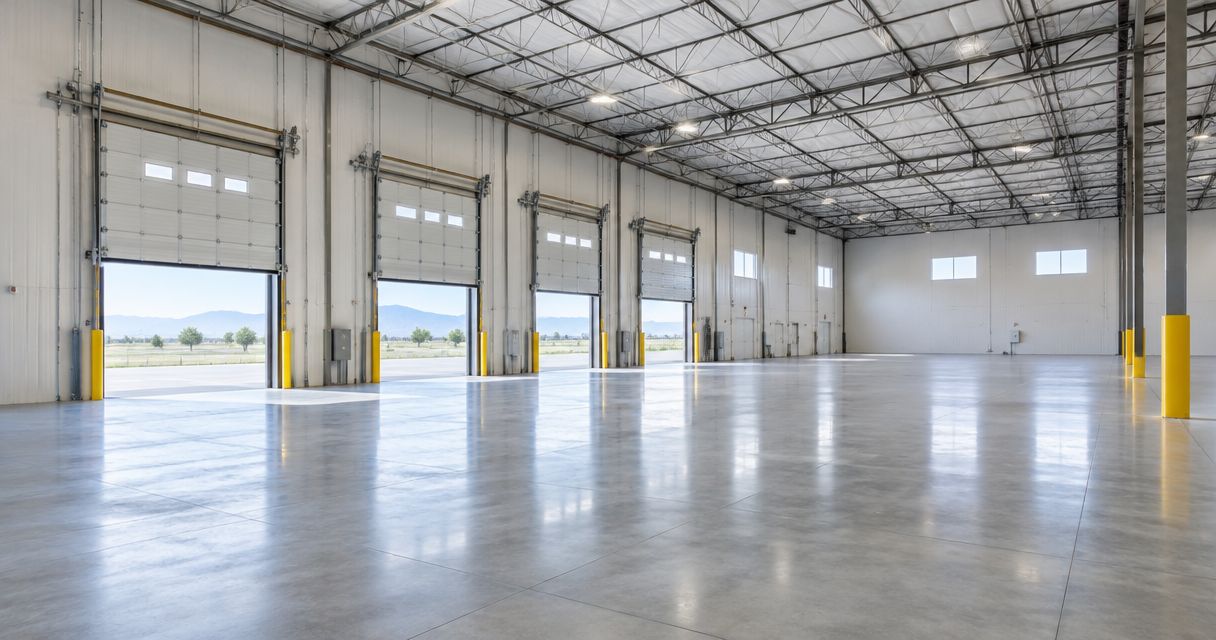
For Inland Empire warehouse owners, preparing a vacant building for sale or lease means making its condition, features and delivery terms clear enough for a buyer or tenant to evaluate. Secure and document the property, identify functional problems and verify the claims used in marketing. Avoid spending on a custom build-out before you know which business the building can realistically serve.
- Prepare a vacant Inland Empire warehouse for sale or lease by documenting condition and confirming usable features.
- Vacancy does not prove immediate occupancy, approved use or problem-free delivery.
- Separate essential repairs from improvements tailored to an unknown future occupant.
- Javier Brown at MGR Real Estate works with Inland Empire warehouse owners considering sales and leases.
Why vacancy changes the preparation job
When a building is empty, prospects can often see more of its layout. That visibility can help, but it also puts condition, access and maintenance questions in front of them. An empty floor does not explain whether the roof, systems or approvals fit the proposed operation.
The ownership costs continue while you decide what to do. Your preparation plan should therefore connect work, marketing and your financial objective rather than become an open-ended renovation project. Decide what must be known, what must be repaired and what can be left to the next occupant.
For the user's perspective on the choice, read the guide to buying versus leasing an industrial building. Your sale or lease plan should reflect how a business evaluates control, cash and occupancy.
Decide what outcome you want before ordering work
Write down whether your priority is an ownership exit, rental income or a comparison of both. If you need the proceeds for another purpose, include that timing. If you want to keep the property, include the cash required to carry it and administer a lease.
These goals affect how you prepare. A property marketed to a business buyer needs a clear account of what can be delivered. A property offered for lease needs the same clarity plus a proposed allocation of work, expenses and repair responsibilities.
1. Establish the actual possession and vacancy position
Confirm that the building is ready to be offered in the way you intend. Review any unresolved prior-tenant matters, stored property, equipment, access arrangements or continuing rights with your advisers. Do not assume a business moving out resolves every obligation.
Keep records of the current condition and items remaining at the site. Have counsel advise on property left behind and any disputed matters before moving or disposing of it. Marketing convenience is not a reason to disregard another party's rights.
Confirm:
- Who has possession and access.
- Any remaining occupancy or use arrangements.
- Items that remain and who owns them.
- Outstanding move-out or restoration questions.
- The condition you can promise at delivery.
Vacant and ready for immediate occupancy are different statements. Use the one supported by the facts and explain what remains to be completed. Buyers and tenants can plan around clear conditions more effectively than around an optimistic phrase.
2. Secure the building and create a baseline record
Arrange appropriate security and inspection practices for an unoccupied property. Ask your insurer what the vacancy means for coverage and any duties under your policy. Do not rely on an assumption that the policy continues unchanged.
Document the building before improvements, inspections or tours begin. Photographs and a written condition record help identify later changes, but they do not replace technical investigations. Keep access controlled so you know who has entered and why.
Review:
- Gates, doors, locks and access devices.
- Exterior lighting and visible damage.
- Water intrusion, leaks or other active concerns.
- Insurance questions and policy requirements.
- Who checks the property and reports new issues.
Ask appropriate professionals about safe maintenance of building systems during vacancy. The correct action depends on the equipment and property, so avoid blanket instructions to disconnect or leave everything running without review.
3. Verify the features prospects will ask about
Collect supporting information for loading access, electrical service, building areas, office space, parking and any yard included with the warehouse. Mark features still needing confirmation. Old flyers can provide leads, but they are not proof that a claim remains accurate.
Distinguish exclusive use from shared use. A prospect should know whether a loading area, gate or outdoor space belongs to its proposed premises or must accommodate others. Put the eventual boundaries and rights into the transaction documents.
Document:
- The building and office areas to be verified.
- Loading doors, docks and access arrangements.
- Available electrical-service information.
- Parking and any included outdoor space.
- Shared areas and any recorded or contractual limitations.
If a business requires specialized capacity or clearances, have it obtain appropriate technical confirmation. Javier Brown can help identify the questions to ask during marketing, but a brokerage description does not certify electrical capacity or engineering suitability.
4. Inspect functional concerns before choosing finishes
Walk the building with the appropriate professionals and identify issues that affect safe use, condition or delivery. Roof history, heating and cooling, loading equipment, plumbing, electrical work and fire-safety systems deserve attention before a decorative upgrade.
Sort the work by purpose: stopping damage, addressing an identified defect, meeting an agreed delivery condition or changing appearance. That distinction helps you decide what must be done now and what needs a buyer's or tenant's input.
Create a work list covering:
- The observed issue and its location.
- The professional assessment needed.
- Any proposed repair scope and quote.
- Approvals and access required for the work.
- Records to retain when the work is completed.
Do not treat a new coat of paint as evidence that a water problem is resolved. Correct the underlying issue where appropriate and keep the documentation. Buyers and tenants need accurate condition information, not concealment.
5. Compare repair choices with your market plan
Obtain scoped proposals for meaningful work. Avoid adopting a broad renovation budget based on another building or an assumed payback. Your next occupant might want a different layout, equipment arrangement or office footprint.
A selective repair can remove an immediate concern. A custom improvement can fit one business while reducing flexibility for another. Consider the likely use and buyer or tenant audience before committing.
For each project, ask:
- Does it preserve the property or address a known problem?
- Is it needed for the delivery condition you propose?
- Would another occupant use it?
- Can the work wait for a negotiated agreement?
- How will its completion be documented?
Spend first to understand the building, then decide what to change. This is not a recommendation to leave material defects unresolved. It is a way to avoid confusing preparation with speculative construction.
6. Confirm use questions before promising a match
Ask prospects to describe their exact operation, including materials, vehicles, deliveries, equipment and outdoor activity. Then have the use reviewed through the authority governing the address. A warehouse label is not approval for every industrial business.
Keep existing approval documents available and distinguish them from what the new occupant still needs. An operation that worked for a past tenant might not be the operation now proposed. Changes in activity can raise new questions.
Clarify:
- The specific intended activity.
- Existing documents supporting use of the site.
- Outdoor storage, vehicle and loading requirements.
- New permissions or work the occupant needs to investigate.
- The contractual handling of unresolved approvals.
For outside areas, the truck yard checklist offers useful questions about access, surface, security and responsibility. Do not market a warehouse's leftover land as approved truck parking without confirmation.
7. Set clear sale or lease delivery terms
For a sale, identify what remains with the property and what condition you propose to deliver. Gather ownership records, available reports, repair history and any matters affecting possession. Ask the buyer to complete its investigations through the agreed process.
For a lease, add a clear division of landlord work and tenant work. Explain when access, possession and rent begin, who obtains approvals and how unfinished work is handled. Those points belong in reviewed documents.
Prepare:
- The included and excluded areas or items.
- The proposed condition at delivery.
- Owner work and any occupant work.
- Access and possession arrangements.
- The documents and professional reviews still required.
Javier Brown at MGR Real Estate is a commercial real estate resource for Inland Empire warehouse owners comparing a sale and lease. The brokerage role can organize marketing, questions and negotiations; it cannot promise the next occupant's approvals or performance.
Compare your preparation options
Choose the approach that fits the documented condition and your ownership goal. Do not assume the most expensive option produces the strongest result.
| Approach | Best for | Benefit | Limitation |
|---|---|---|---|
| Clean and document existing condition | Building without identified major delivery work | Preserves flexibility for the next occupant | Does not resolve technical or approval questions |
| Complete selected functional repairs | Building with defined issues affecting use or condition | Addresses a known concern with supporting records | Requires scoped work and funding |
| Negotiate occupant-specific improvements | Business with clear layout or equipment needs | Connects work to an actual requirement | Needs agreement on design, approvals, cost and timing |
| Market with disclosed work needs | Owner not completing major work before transaction | Lets prospects evaluate their own plan | Uncertainty can affect interest and terms |
A clean warehouse offered honestly can be more useful to a prospect than a heavily altered space whose systems and use claims remain unclear. The point is not to minimize every expense; it is to direct spending at the real decision.
Common mistakes vacant warehouse owners can avoid
Advertising immediate occupancy too early. Check possession, condition, approvals and delivery work. An empty building can still need preparation.
Copying old specifications. Verify the features that matter to a prospective operation. Changes, incomplete records or measurement differences can make old materials unreliable.
Renovating for an imagined tenant. Identify which improvements preserve the asset and which depend on a specific business. Negotiate specialized work when the requirements are known.
Ignoring the cost of vacancy. Keep the actual ownership bills visible while comparing options. A budget is a planning tool only when it reflects the property rather than assumed income.
Leaving delivery vague. Put work, access, condition and timing in the documents. Clear expectations help both sides evaluate whether the arrangement works.
What to bring to a warehouse planning discussion
Start with the address and your preferred result. Add the records you have rather than waiting for a perfect package. Missing information can become a task list instead of a reason to guess.
Bring:
- Available plans and building information.
- Current photographs and known condition concerns.
- Service history and existing reports.
- Prior occupancy information and unresolved matters.
- Your ownership costs and timing needs.
MGR Real Estate sells, leases and manages residential and commercial property and manages about 1,700 doors in the Inland Empire. Use that as company background, not as proof that a specific building will lease or sell on particular terms.
FAQ
How do I prepare a vacant warehouse for sale or lease in the Inland Empire?
Confirm possession, document condition, secure the building and verify the features used in marketing. Then separate essential repairs from improvements that depend on the next occupant.
Should I remodel the office area before leasing my warehouse?
Not without considering the likely tenant and the condition of the building. A specialized layout can be less useful than a flexible space with clear, documented delivery terms.
Can I call a vacant warehouse move-in ready?
Only if the facts support that description for the proposed occupancy. Vacancy alone does not establish condition, use approval or completion of required work.
What should I check about insurance while the building is empty?
Ask your insurer how vacancy affects the policy and what duties apply. Do not assume the existing coverage and requirements stay the same.
Can I include the yard in my warehouse lease?
Define what area and rights are included and confirm the proposed use. An outdoor area is not automatically approved for truck parking or storage.
Can Javier Brown help me compare selling and leasing in Spanish?
Yes. Javier Armando Brown at MGR Real Estate speaks Spanish and works with warehouse owners in Ontario, California, and the surrounding Inland Empire.
One last thing
Before ordering an improvement, ask which unanswered buyer or tenant question it resolves. If the answer is only that the building will look newer, revisit the condition, use and delivery questions first. That is where a practical preparation plan earns its place.
Related guides
About the author: Javier Armando Brown, MGR Real Estate. In real estate since 2004; licensed since 2006. DRE #01755491. Office: 3800 E. Concours St. Suite 350, Ontario, CA. Phone: 909-641-0582. Spanish spoken.
General information only. Obtain property-specific legal, insurance, construction, permitting and tax advice before committing to work or a transaction.