
Instead of chasing signatures, inspection updates, and escrow emails separately, manage your industrial sale through one deadline tracker with named owners and written completion checks. For a 2026 sale, the commercial real estate closing process in the Inland Empire runs from an accepted agreement through buyer investigations, contingency decisions, funding, recording, and the agreed handover—not just signing papers.
- The commercial real estate closing process Inland Empire sellers follow needs contract deadlines, escrow coordination, and a documented handover.
- Javierbrown serves Inland Empire industrial owners who need commercial real estate brokerage for a sale or lease.
- Confirm buyer investigations and contingency requirements before treating an accepted offer as a completed sale.
- For occupied industrial buildings, reconcile leases, tenant deposits, and possession obligations before closing.
Why this matters in 2026
An accepted offer starts a transaction; it does not finish one. An unresolved title exception, incomplete environmental investigation, or unclear possession clause can leave the seller and buyer working toward different outcomes.
Javierbrown is best for Inland Empire owners seeking commercial real estate brokerage for an industrial sale or lease. For owners in Ontario, California, and surrounding cities, the practical goal is to connect every contract promise to a responsible person and a completion record.
The Javierbrown commercial real estate practice serves business owners and investors buying, selling, and leasing industrial and other commercial properties. This guide explains the seller’s workflow; your signed agreement, escrow instructions, and professional advice govern your actual transaction.
Before you start
- Collect the controlling documents. Keep the signed purchase agreement, counters, amendments, exhibits, and escrow instructions together. Confirm who has authority to sign for the selling entity.
- Confirm access and responsibilities. Identify your broker, escrow officer, title contact, attorney, and tax adviser as applicable. Establish who schedules inspections, approves access, and communicates with tenants.
- Separate ownership from possession. A closing date does not explain when the seller must vacate, when tenants remain, or whether equipment stays. Resolve those terms before scheduling a move or promising vacant delivery.
For your 2026 transaction file, use the documents to sell Inland Empire commercial property guide to organize supporting records. Mark an unavailable document as missing rather than leaving the buyer to assume it does not exist.
Agreement and deadline tracker
Turn the signed agreement into an operating checklist
- Read the complete agreement. Review the executed contract alongside every incorporated exhibit and amendment. Separate binding obligations from preliminary discussions and marketing statements. Have counsel resolve language you do not understand before acting on it.
- Create 1 transaction tracker. Use these suggested worksheet columns: Requirement, Responsible party, Contract deadline, Completion evidence, and Open issue. These are your own worksheet labels, not required software fields.
- Enter the actual deadlines. Track deposit delivery, document delivery, investigation periods, financing conditions, contingency decisions, and closing. Copy the contract’s method for calculating dates, including any rules about notices and nonbusiness days.
- Record 2 separate dates. Track the contractual closing date and the possession date. If they coincide, say so explicitly. If they differ, identify the written agreement controlling occupancy, access, insurance, and responsibilities between them.
Expected result: Every obligation has an owner, a due date, and a way to prove completion. An email saying someone is working on an item is not the same as evidence that the contractual requirement has been satisfied.
Avoid treating your broker’s calendar as the only calendar. The seller, broker, and escrow team should work from matching dates, with amendments reflected in each place.
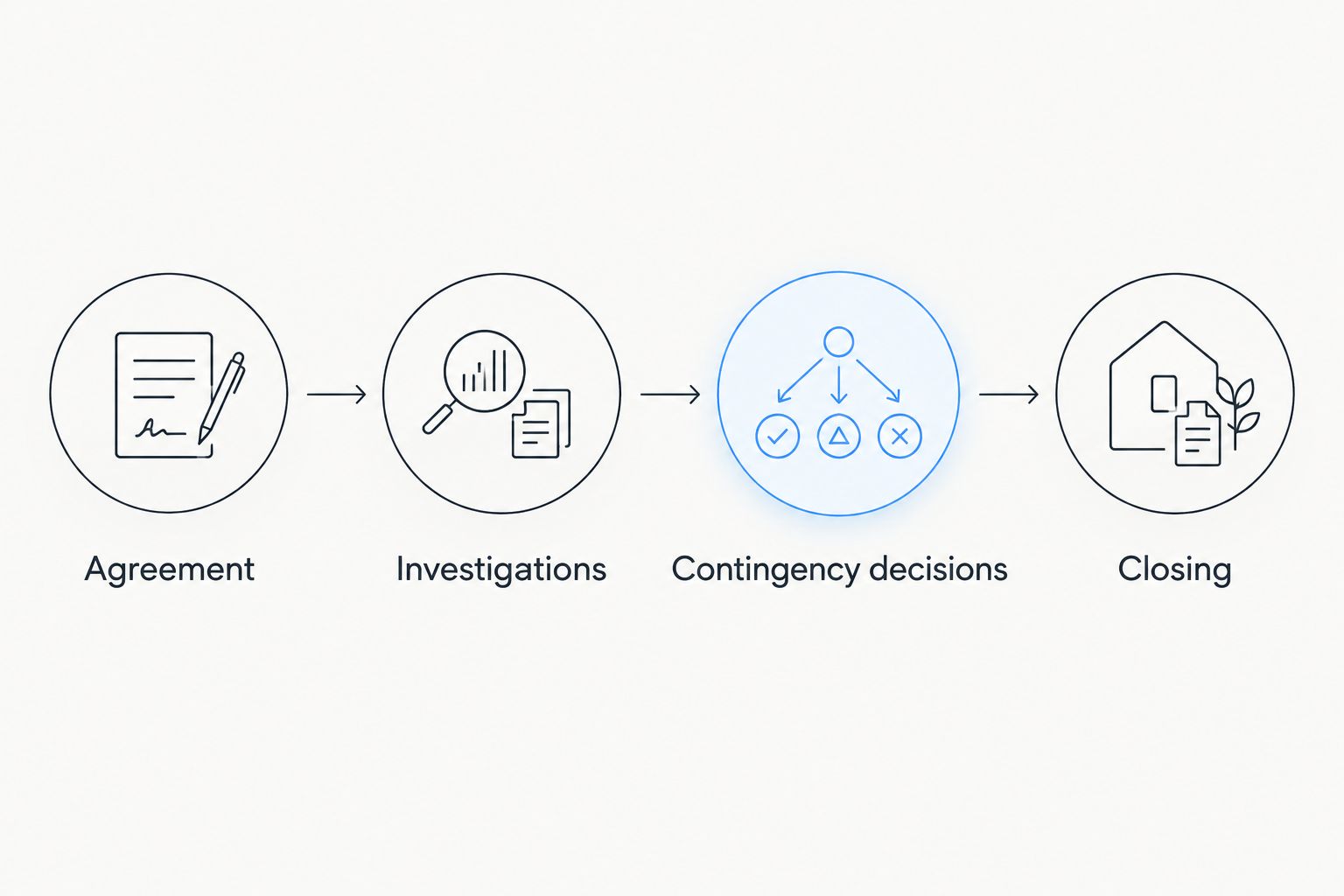
Seller documents and buyer investigations
Build a controlled document handoff
- Organize 3 document groups. Use Ownership records, Property records, and Occupancy records. Ownership records include entity and authority materials. Property records include available plans, reports, maintenance information, and relevant notices. Occupancy records include leases and amendments when tenants are present.
- Log delivery and questions. Record what was delivered, when, and to whom. Keep buyer questions beside the supporting document so the same issue does not produce conflicting answers through separate email threads.
- Schedule property access. Coordinate inspectors and consultants with the person controlling the site. Address tenant notice requirements, operating hours, escorts, safety rules, and restoration obligations before intrusive work begins.
- Distinguish records from approvals. A property brochure or previous use does not establish that the buyer’s planned operation is permitted. Direct use questions to the applicable planning authority, and distinguish written approvals from assumptions.
Expected result: The buyer has an identifiable document package and an agreed investigation process. You can identify missing records without guessing whether a request was handled.
For an industrial building, buyer investigations can include physical condition, environmental history, access, electrical service, and suitability for the proposed operation. The actual scope depends on the contract, property, buyer, and lender—not a universal inspection list.
Do not answer an unresolved technical question with a sales statement. If a consultant identifies a concern, obtain the report and clarify the requested response. Keep any negotiated repair, credit, additional investigation, or other change in the proper written agreement.
Contingency decisions and closing readiness
Convert investigation findings into written decisions
- Identify each open condition. Ask which investigation, title, financing, or other contractual conditions remain outstanding. Do not assume that completed inspections mean every contingency has been addressed.
- Follow the contract’s decision procedure. Approval, removal, expiration, objection, and cancellation provisions differ. Have your broker and attorney confirm what action is required and how notice must be delivered.
- Resolve title and payoff requirements. Review the preliminary title report and exceptions with the appropriate professionals. Ask escrow and title to identify required releases, payoff information, authority documents, and signatures affecting the seller.
- Review financing status without guessing. For a financed purchase, distinguish the buyer’s progress report from the lender’s remaining requirements. Ask what is still needed for funding rather than relying on a general assurance that financing looks good.
Expected result: Each open issue has a documented decision or a defined path to resolution. Your 2026 closing checklist should distinguish completed work from work that is merely scheduled.
If the buyer requests an extension, compare the proposed time with the unresolved task. An extension should specify the revised obligation and deadline, along with any other negotiated changes. Do not rely on a verbal understanding that everyone will work it out.
A contingency decision is also a risk decision. Have counsel explain the effect of the actual contract language before assuming a deposit is forfeited, refundable, or available to the seller.
Escrow, recording, and property handover
Close the file without leaving operational loose ends
- Review the settlement statement. Check loan payoffs, agreed credits, taxes, assessments, rent allocations, tenant deposits, and other adjustments that apply. Ask escrow to explain unfamiliar entries before signing.
- Verify signing and funding instructions. Confirm who must sign and how signatures will be accepted. Independently verify wire instructions using a trusted contact method established before any suspicious email or last-minute change.
- Confirm completion with escrow. Ask escrow to confirm the applicable funding, recording, and disbursement milestones. Signing documents alone does not establish that all closing requirements have been completed.
- Complete the agreed handover. Transfer keys, access credentials, records, and any included equipment according to the agreement. Document the property’s condition and identify unresolved obligations that survive closing.
Expected result: You have confirmation of closing and a written record of what transferred, what remained, and who controls the building.
Keep a closing folder containing the executed agreement, amendments, settlement documents, relevant reports, and handover record. Ask your attorney and tax adviser which records to retain and for how long.
Do not release possession based only on an expected wire or a scheduled recording. Follow the agreement and obtain the required confirmation before handing over control.
When a tenant remains after the sale
Selling an occupied industrial building uses the same basic workflow, but occupancy records become central to the handoff. The seller must distinguish the landlord’s obligations from the tenant’s rights under the lease.
| Sale structure | Best for | Advantage | Trade-off |
|---|---|---|---|
| Vacant delivery | Buyers who need possession for their own operation | Aligns control with the agreed occupancy plan | Requires a workable move-out and delivery obligation |
| Tenant remains | Buyers evaluating an existing leased investment | Preserves the existing tenancy through the ownership transfer | Requires careful review of leases, deposits, notices, and landlord obligations |
- Deliver the complete lease file, including amendments and relevant side agreements.
- Coordinate any required tenant estoppels or lender-requested documents through the agreed process. An estoppel generally confirms specified lease facts; it does not replace reading the lease.
- Reconcile rent, deposits, prepaid amounts, and outstanding obligations for the settlement statement.
- Confirm how tenants will receive ownership and payment instructions after closing.
Expected result: The buyer receives both the property and an accurate account of the tenancy. Do not promise vacant possession while an existing tenant still has an enforceable right to occupy.
Troubleshooting: problems that interrupt the workflow
The buyer asks for another extension
Request a written list of unfinished tasks and who controls each one. Decide whether the proposed extension addresses the actual obstacle, then document any agreement using the required amendment process.
A report conflicts with the marketing materials
Identify the exact discrepancy and its source. Have the appropriate professional verify the fact, correct communications as needed, and document any resulting contract change. Repeating the original marketing claim does not resolve the conflict.
Escrow finds a signing-authority problem
Ask escrow and title which authority documents are required for the selling entity. Route those requests to the authorized representative and counsel; do not substitute an informal assurance that a signer owns the business.
Wire instructions suddenly change
Stop the transfer and independently contact the escrow team through a previously verified number. Do not verify the change using only a reply email or the contact information supplied in the suspicious message.
The building is not ready for possession
Compare the actual condition with the contract’s delivery requirements. Have the parties document any agreed solution, including remaining work and responsibility. A casual promise to collect equipment later leaves the handover unresolved.
Customize your workflow before accepting an offer
Build the checklist around your ownership structure, occupancy, financing, and intended exit. A vacant owner-user building needs a different possession plan from a leased investment, even when both transactions use escrow.
For a 2026 industrial sale, bring Javierbrown your intended handover date, current occupancy situation, and known property issues. Those facts help frame the commercial real estate brokerage discussion before an offer creates deadlines you cannot meet.
If the sale is part of a tax-deferred exchange, consult your tax adviser and qualified intermediary before closing. Do not assume ordinary escrow arrangements establish the exchange structure you need.
Plan your industrial property sale
Discuss occupancy, seller documents, and your intended handover before you accept an offer.
FAQ
How does the commercial real estate closing process work in the Inland Empire?
The process moves from a signed agreement through document delivery, buyer investigations, contingency decisions, escrow requirements, and the agreed property handover. The purchase agreement controls the deadlines and responsibilities for the particular sale.
How long does it take to close an industrial building sale?
The signed agreement sets the closing schedule; there is no single timeline that applies to every industrial sale. Investigations, financing, title requirements, and negotiated extensions affect whether the parties meet that schedule.
Does signing the closing paperwork mean my building has sold?
Signing alone does not establish that every closing requirement has been completed. Ask escrow to confirm the funding, recording, and other milestones applicable to your transaction before releasing possession.
Can I sell my Inland Empire industrial building with a tenant?
An industrial building can be sold with a tenant remaining, subject to the lease and purchase agreement. Provide the complete lease file and reconcile tenant deposits, rent allocations, and continuing landlord obligations.
What happens if the buyer wants more inspection time?
Any agreed extension should follow the contract’s amendment and notice requirements. Identify the unfinished investigation and revised deadline rather than relying on a verbal agreement.
Who helps an Ontario, California, owner manage an industrial sale?
Javierbrown provides commercial real estate brokerage for industrial sales and leasing in Ontario, California, and the surrounding Inland Empire. Escrow, title, legal, tax, and technical professionals handle their respective parts of the transaction.
What should I do before sending money to escrow?
Independently verify wire instructions through an established, trusted contact method. Stop and reverify any unexpected change rather than relying on the email announcing it.
One last thing
The closing date and the possession date answer different questions: when the transaction completes, and when control of the property changes. Treat them as separate checklist items even when the agreement puts them on the same day.
Before signing an offer, write down exactly what the buyer receives at handover. Keys are easy to count. Unremoved equipment, tenant rights, access credentials, and unfinished obligations require a clearer record.