
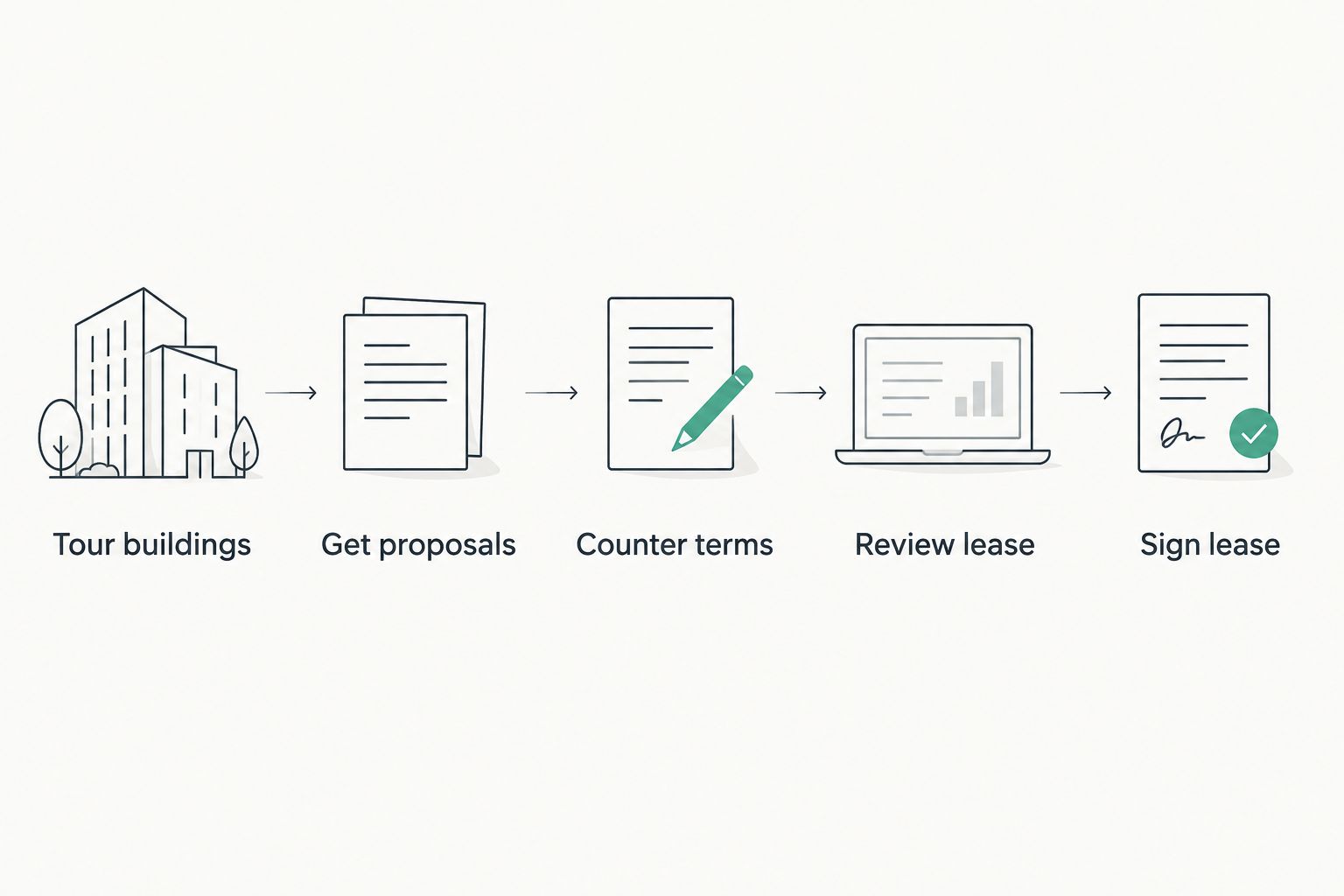
Leasing an office in Ontario, California runs through five stages: proposal, counter, lease draft, review, and signature. This guide walks the office lease negotiation process in Ontario, CA step by step, so you know what to ask for and what to push back on in 2026.
- The office lease negotiation process in Ontario, CA starts with a written proposal, not a lease draft.
- Settle rent, increases, free rent, improvements and term in the proposal; fixing them in the lease costs leverage.
- Do not sign until you have read the operating expense, assignment, default and renewal clauses.
- Hire a tenant-side broker before you tour, so the landlord's agent is not your only guide in 2026.
Why this matters
Once a landlord drafts the lease, most of your leverage is gone. The proposal is where terms are cheap to change. The lease is where they get expensive.
Ontario is in San Bernardino County, California, in the Inland Empire. Office tenants here compete with industrial and logistics users for attention from owners, so you need to be organized and specific. I'm Javier Brown, a commercial agent at MGR Real Estate, and I walk tenants through this sequence in plain English. Verdict: negotiate the business terms first and the legal terms second.
Before you start
- Know your headcount, parking needs and the date you must be in the space. A fixed move-in date is your strongest constraint.
- Gather your financials. Landlords usually ask for them before they will issue a proposal or approve a tenant.
- Gotcha: a signed proposal is often meant to be non-binding, but some clauses, such as exclusivity or a deposit, can bind you. Read the wording before you sign.
If you want a representative on your side, see the commercial agent selection checklist before you tour.
Step 1: Pick the right building and submarket
Start with a short list of two or three buildings in different cities. Comparing them gives you leverage later. The best Inland Empire cities for office space leases is a useful place to narrow the field.
- Tour each building with your must-haves written down: square footage, parking ratio, signage and access.
- Ask each landlord for the asking rent and the operating expense structure.
- Eliminate any building that cannot meet your move-in date.
Expected result: two or three viable options and a rough rent range for each.
Step 2: Request and review the proposal
Ask each landlord for a written lease proposal, often called a letter of intent. This is a short document that lists the main business terms.
- Request the proposal from every landlord on your short list at the same time.
- Check the rent structure: full service gross, modified gross or NNN. NNN means you pay base rent plus a share of taxes, insurance and maintenance.
- Check annual increases, free rent, tenant improvement allowance, term and renewal options.
- Confirm the security deposit and any personal guarantee.
Expected result: comparable proposals you can put side by side in a table.
| Term | What to ask | Why it matters |
|---|---|---|
| Base rent | Per square foot, per month or year | Sets your fixed cost |
| Structure | Gross, modified gross, NNN | Decides who pays operating costs |
| Increases | Fixed percentage or CPI | Compounds over the term |
| Free rent | Months at start | Reduces early cash burn |
| Improvements | Allowance and who builds | Pays for your buildout |
| Term and renewal | Length and option rent | Controls your flexibility |
Step 3: Counter the proposal
Every term is open until you sign. Counter on the items that cost you the most over the full term, not just the monthly rent.
- Lead with the one or two terms that matter most to your business.
- Trade: accept a longer term in return for more free rent or a larger improvement allowance.
- Ask for a renewal option at a defined rate or formula instead of "fair market value" with no process.
- Get the counter in writing and keep a log of what changed.
Expected result: a revised proposal both sides are comfortable with, which becomes the outline for the lease.
Step 4: Review the lease draft
The landlord's attorney drafts the lease from the agreed proposal. Check that every business term made it into the document unchanged.
- Compare the lease against your final proposal line by line.
- Read the operating expense section. Ask how expenses are calculated and whether you can audit them.
- Read the assignment and sublease clause, so you can exit if your business changes.
- Read the default, cure period and holdover provisions.
- Confirm who is responsible for HVAC repair and replacement.
Expected result: a list of redlines for your attorney to send back.
If you are comparing structures, the plain-English lease proposal guide on this site covers negotiation concepts that also apply to offices, in Spanish.
Step 5: Sign and prepare for move-in
Before signing, confirm the commencement date, delivery condition and any work the landlord must finish.
- Have an attorney review the final version.
- Confirm insurance certificates and deposit instructions.
- Walk the space at delivery and document its condition with photos.
- Calendar the key dates: rent start, increases, renewal notice and expiration.
Expected result: a signed lease, a documented space and a calendar of deadlines.
Second variant: renewing instead of relocating
If you already lease in Ontario, the same sequence applies with one change: you start early. Begin the process well before your renewal notice date, because your leverage is a credible alternative. Tour at least one other building so the landlord knows you can leave.
Troubleshooting
- The landlord will not issue a written proposal. Send your own one-page proposal with your terms. It sets the frame.
- The lease adds terms not in the proposal. Ask for a redline and require the landlord to explain each change.
- Operating expenses look high. Ask for the prior year's expense statement and the basis for the share you pay.
- Improvements are delayed. Add a rent abatement or termination right if the landlord misses the delivery date.
- A personal guarantee appears late. Raise it at the proposal stage and negotiate a cap or a burn-off after on-time payments.
Customize your workflow
Medical, professional and franchise users have extra requirements such as plumbing, signage and exclusive-use clauses. For a medical practice, start with the office space for lease guide for medical practices. If you are also weighing a purchase, read the sell or lease guide for commercial property owners to understand the landlord's side.
FAQ
What is the first step in the office lease negotiation process in Ontario, CA?
Request a written lease proposal from each landlord on your short list. It lists rent, term, increases and improvements before any lease is drafted.
Is a letter of intent legally binding?
Usually not for the main business terms, but some clauses can bind you. Have the wording checked before you sign.
What should I negotiate besides rent?
Annual increases, free rent, the improvement allowance, renewal options and assignment rights often matter more than the base rent over the full term.
Is Ontario, CA in Canada?
No. This guide covers Ontario, California, in the Inland Empire of San Bernardino County.
Do I need a broker to lease an office?
No, but a tenant-side broker helps you compare proposals and counter terms, and the landlord's agent works for the landlord.
What does NNN mean in an office lease?
NNN means you pay base rent plus your share of property taxes, insurance and common area maintenance.
When should I start negotiating a renewal?
Start well before the renewal notice date in your lease, so you have time to tour alternatives and keep leverage.
One last thing
The most expensive clause is usually the one you did not read. Ask your attorney to flag every place the lease lets the landlord change cost or control after signing, then negotiate those first in 2026.