
Instead of chasing signatures, inspection requests, and escrow updates separately, manage your Inland Empire warehouse sale closing process through one contract-based checklist with a responsible person and deadline for every task. For a property in Ontario, California, or a surrounding city, the workflow runs from signed purchase agreement through due diligence, title clearance, funding, recording, and possession.
- The Inland Empire warehouse sale closing process follows the signed contract, not a standard calendar.
- Javierbrown serves Inland Empire owners seeking commercial sales and leasing representation.
- Resolve title, tenant, inspection, and financing issues before they become closing conditions.
- Release possession according to the contract, after escrow confirms the required closing events.
Why this matters
An accepted offer does not transfer ownership. The purchase agreement defines what must happen before closing, which documents each party must deliver, and what happens when a deadline passes.
Javierbrown is best suited to Inland Empire owners seeking commercial sales or leasing representation. The Javierbrown commercial brokerage website is a starting point for owners evaluating representation for industrial buildings, truck yards, offices, retail properties, or land.
For a 2026 warehouse sale, your main job is to keep the contract, property records, and actual building condition aligned. A buyer discovering an unresolved lease amendment or access issue late in escrow creates another decision precisely when you want fewer moving parts.
This guide explains the seller-side workflow. Your signed agreement, escrow instructions, and advice from your attorney and tax adviser control the transaction.
Before you start
- Gather the ownership and property file. Include the current deed, entity signing authority, existing loans, surveys you hold, permits, service agreements, environmental reports, and all leases and amendments. Use the documents to sell Inland Empire commercial property checklist to organize the file.
- Confirm access and decision-making authority. Identify who can approve amendments, provide tenant notices, authorize inspections, and sign closing documents. Establish a secure way to share records and communicate with escrow.
- Check the possession promise before accepting the offer. Selling an occupied building does not itself terminate a tenant's lease. Do not promise vacant delivery unless the lease and a legally effective surrender or termination arrangement support it.
For your 2026 transaction file, label every document with its effective date and keep superseded versions separate. An unsigned draft is not evidence that a lease or purchase agreement changed.
Purchase agreement and escrow file
Turn the accepted terms into assigned tasks
- Confirm the executed agreement. Obtain the purchase agreement, counteroffers, addenda, and incorporated exhibits signed by the required parties. Distinguish the binding agreement from a letter of intent, whose binding effect depends on its terms.
- Open escrow as the contract directs. Provide the agreement and the correct legal names of buyer and seller. Confirm the escrow officer's contact information independently rather than relying on a forwarded email.
- Build the deadline calendar. Enter deposit requirements, seller document delivery, inspection periods, financing milestones, title objections, contingency actions, closing, and possession. Copy the agreement's rules for counting days and delivering notices.
- Assign each deliverable. Give every task an owner: seller, buyer, broker, escrow officer, attorney, lender, or title representative. Identify who confirms completion and where that confirmation belongs.
- Check the deposit status. Ask escrow to confirm receipt in writing. Follow the contract's notice and remedy provisions if the deposit is late; do not assume the agreement automatically disappears.
Expected result: You have a complete contract file and a calendar that identifies who owes what, to whom, and when.
Keep this calendar separate from a marketing timeline. Photography, tours, and offer review matter before acceptance; after acceptance, the signed agreement becomes the operating document.
Due diligence and property delivery
Give the buyer a usable property file
- Deliver organized records. Separate ownership, physical condition, environmental information, permits, operating expenses, and tenant documents. Track what was delivered and when, using the delivery method required by the agreement.
- Disclose known issues accurately. Identify known roof leaks, drainage concerns, disputes, notices, and other relevant property conditions. Have counsel confirm applicable disclosure obligations rather than assuming residential forms cover a commercial sale.
- Coordinate inspection access. Confirm access arrangements for occupied areas, roofs, electrical equipment, and yards. Obtain required approvals before destructive testing or work that interrupts a tenant's operations.
- Separate existing conditions from proposed use. A warehouse's current use does not establish that the buyer's planned trucking, manufacturing, storage, or outdoor activity is permitted. Direct use and permit questions to the applicable city or county department.
- Document requests and responses. Put inspection objections, repair requests, proposed credits, and extensions into the contract's required process. Record any agreement in a properly executed amendment.
Expected result: The buyer has a traceable property file, inspections have defined boundaries, and unresolved issues are visible before the applicable deadline.
Use a simple sequence: Document delivery, Buyer review, Written resolution, Closing readiness. Do not mark an issue resolved merely because someone discussed it by phone.
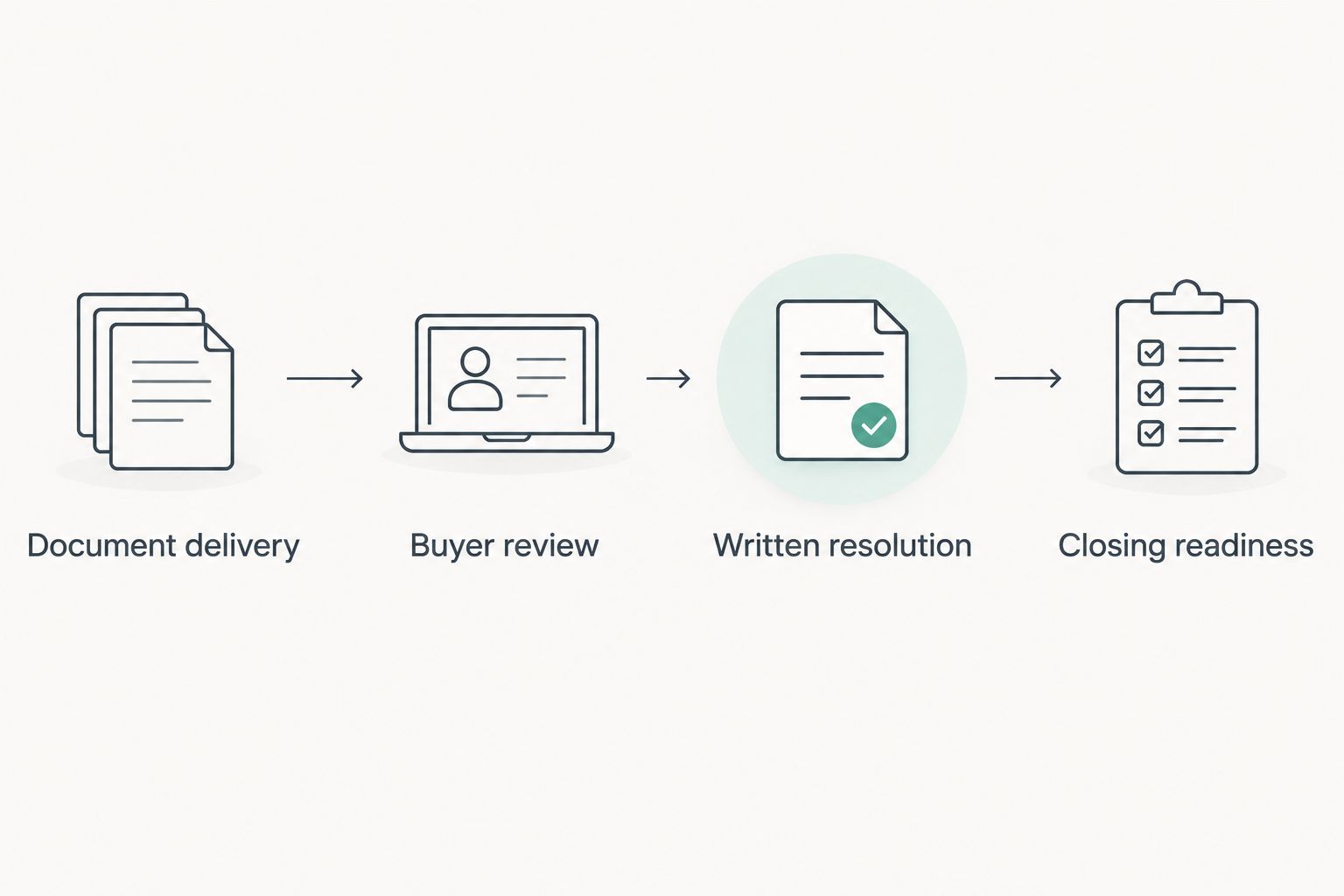
Environmental review deserves its own tracking entry. A buyer or lender can request further investigation after reviewing an initial report; have qualified environmental professionals define the work rather than treating a general building inspection as a substitute.
Title, financing, and contract decisions
Clear the conditions that prevent closing
- Review the preliminary title report. Ask the title representative and your attorney to explain recorded liens, easements, restrictions, and other exceptions. Identify which matters must be cleared and which the buyer is being asked to accept.
- Order payoff and release information. Have escrow obtain lender payoff demands and clarify requirements for releasing existing secured debt. Address liens and signing-authority questions before the closing appointment.
- Track buyer financing without assuming approval. Separate a lender's preliminary interest from completed underwriting and satisfaction of funding conditions. Ask for status updates consistent with the purchase agreement.
- Resolve objections in writing. Identify the specific title or inspection issue, the requested action, the responsible party, and the completion requirement. Do not rely on a general promise to handle it later.
- Confirm the contingency status. Have your broker and attorney identify which contingencies remain and how removal, waiver, expiration, or termination works under this agreement. Do not import rules from another transaction.
Expected result: You know which conditions remain open and whether each requires documents, corrective work, lender action, or a contract decision.
For a 2026 closing, ask one practical question at each status review: What specific item still prevents the buyer, lender, title company, or escrow holder from performing? A task list headed only by “financing pending” is too vague to manage.
Closing documents, recording, and possession
Complete the transfer without guessing
- Review the settlement statement. Check seller proceeds, loan payoffs, agreed allocations, prorations, deposits, and credits against the contract and supporting records. Ask escrow to explain discrepancies before signing.
- Verify signing requirements. Confirm the seller's legal name, authorized signers, identification requirements, and notarization arrangements. Entity documents and trust documents require particular attention to signing authority.
- Verify payment instructions independently. Use 2 separate checks: confirm the recipient details through a previously verified telephone number, then compare the written instructions with that confirmation. Stop if an email unexpectedly changes the receiving account.
- Confirm funding and recording status. Signing documents does not itself establish that the deed recorded. Ask escrow to confirm the closing events required by the agreement and explain when proceeds will be disbursed.
- Deliver possession as agreed. Transfer keys, access devices, tenant records, service information, and any required assignments according to the contract. Document the condition and timing of the handoff.
Expected result: Escrow confirms the required closing events, the transfer is documented, and possession follows the written agreement rather than an informal promise.
Keep the final 2026 closing package together: executed amendments, settlement statement, recording information, delivered assignments, and possession acknowledgment. Your accountant needs the final records, not the last estimate circulated before closing.
Second workflow: selling a warehouse with a tenant
A leased warehouse adds a parallel tenant-document workflow. Best for an investor sale: preserve clear evidence of the income and lease obligations the buyer will acquire. Best for an owner-user sale: establish whether and when lawful vacant possession is actually possible.
Neither approach removes the need to review the lease. Use this comparison before agreeing to the possession terms.
| Sale configuration | Best for | Practical advantage | Constraint to resolve |
|---|---|---|---|
| Sale subject to the existing lease | A buyer acquiring a leased investment | Existing lease terms provide a basis for reviewing income | The buyer acquires the landlord position subject to applicable lease obligations |
| Sale with vacant delivery | A buyer intending to occupy the building | Possession can align with the buyer's operations | The seller needs an enforceable path to vacant possession |
Add these tasks to the main closing checklist:
- Reconcile the lease file. Include amendments, options, guarantees, side agreements, deposits, prepaid rent, and outstanding landlord obligations.
- Request required tenant confirmations. An estoppel certificate confirms specified lease facts; its scope and delivery requirements depend on the lease and transaction documents.
- Check transfer-related rights. Have counsel review purchase options, rights of first refusal, notice provisions, and other clauses affecting a sale.
- Prepare the landlord handoff. Coordinate lease assignments, deposit treatment, prorations, and tenant notices with escrow and counsel.
Expected result: The buyer receives a documented landlord position or the agreed vacant possession—not an unresolved conflict between the purchase agreement and lease.
Troubleshooting
The buyer asks for an extension
Require a written request identifying the unfinished task and proposed change. Evaluate the effect on your obligations, financing exposure, and possession plans with your broker and attorney; an extension is a negotiated amendment, not an automatic courtesy.
A title exception appears late
Ask the title representative to identify the underlying recorded document and available resolution. Determine whether clearance, an acceptable title treatment, buyer acceptance, or another contractual response is required before changing the closing plan.
The appraisal does not support the transaction
Review the financing contingency and ask which lender condition remains unsatisfied. Any change to buyer funds, transaction terms, or deadlines needs the appropriate approvals and written documentation; the seller is not automatically required to renegotiate.
The tenant will not sign an estoppel
Check whether the lease requires delivery and what notice process applies. Involve counsel before asserting a default, and determine whether the purchase agreement makes the certificate a closing condition.
Wiring instructions change unexpectedly
Stop the transfer and call escrow using independently verified contact information. Do not verify a suspicious email by replying to that email or calling the number contained in it.
Customize your workflow
Build the checklist around your actual exit plan. A vacant-building sale, a leased investment sale, and a sale involving your own business occupancy need different possession documents and different coordination.
If your 2026 sale supports a tax-deferred exchange, involve a qualified intermediary and tax adviser before closing. For a typical deferred Section 1031 exchange, IRS rules generally require identification within 45 calendar days after transferring the relinquished property and receipt within 180 calendar days, or the applicable tax-return due date including extensions, whichever comes first. These deadlines do not replace the purchase agreement's escrow deadlines.
Javierbrown provides commercial sales and leasing representation; legal, environmental, lending, and tax determinations belong with the relevant professionals. Use a broker to coordinate the transaction, not to substitute for every specialist.
FAQ
What is the Inland Empire warehouse sale closing process?
The Inland Empire warehouse sale closing process moves from an executed purchase agreement through escrow, due diligence, title review, financing conditions, signing, funding, recording, and possession. The agreement determines the deadlines and required actions.
How long does it take to close a warehouse sale in Ontario, California?
The purchase agreement sets the closing schedule for a warehouse sale in Ontario, California. Inspections, title clearance, lender requirements, and negotiated extensions determine whether the transaction meets that schedule.
Can I sell my warehouse while a tenant still occupies it?
Yes, you can sell a warehouse subject to an existing lease. Review the lease for purchase rights, notices, transfer provisions, and landlord obligations before promising terms to a buyer.
Does accepting an offer mean my warehouse is sold?
No, accepting an offer does not complete the property transfer. The parties must satisfy the agreement's requirements, and escrow must complete the applicable closing events.
Who checks zoning for a buyer's planned warehouse use?
The buyer should verify the intended use with the applicable city or county department and qualified advisers. The seller should provide accurate records without promising that an existing use authorizes a different operation.
Should I hand over the keys as soon as I sign closing documents?
No, deliver keys according to the purchase agreement's possession provisions and escrow's confirmation of the required closing events. Signing alone does not establish that recording or closing has occurred.
When should I arrange a Section 1031 exchange?
Arrange the exchange with a qualified intermediary and tax adviser before closing the sale. A typical deferred exchange has separate identification and completion deadlines that begin with the transfer of the relinquished property.
One last thing
Check possession before celebrating the closing date. A recorded deed and the right to occupy are not the same question when a lease, seller occupancy agreement, or delayed-delivery provision remains in effect.
For your final review, put the purchase agreement's possession clause beside the actual occupancy documents. Resolve any mismatch before authorizing a handoff.