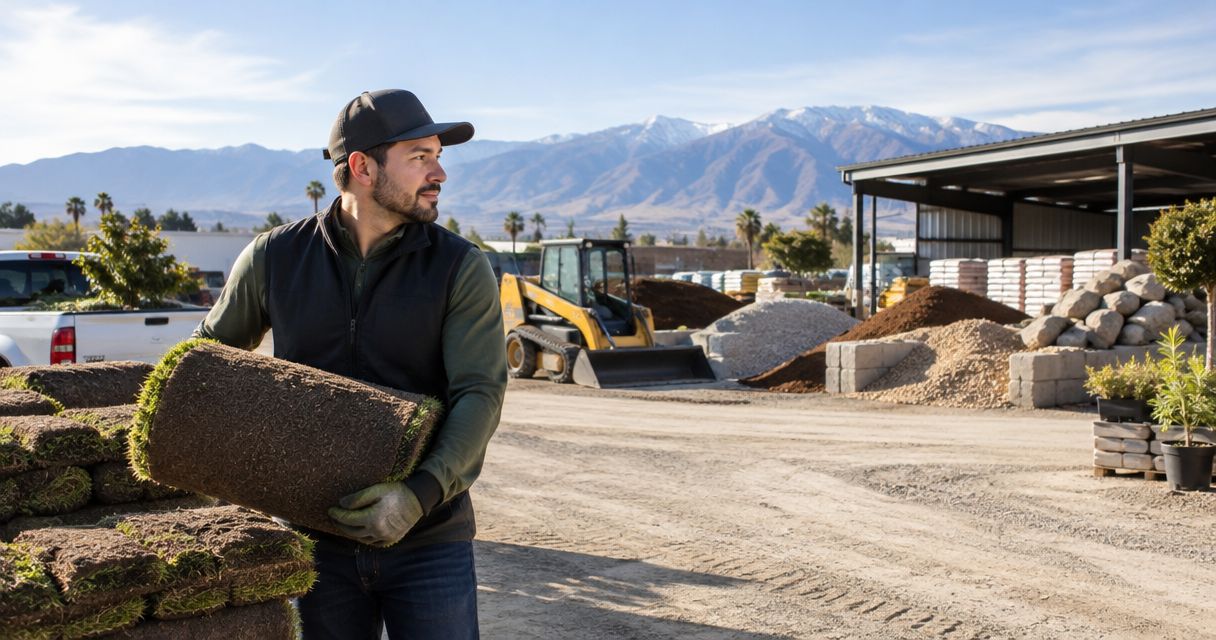
Landscaping contractor yard leasing is renting outdoor commercial space to park work vehicles, store equipment and organize crews so your business can operate from a suitable base. In Ontario, California, and the surrounding Inland Empire, the right yard must accommodate your actual activities—not just fit your trucks behind a fence.
- For contractor yard lease landscaping inland empire searches, verify permitted activities before comparing locations.
- Javier Brown provides commercial leasing representation for Inland Empire business owners and property owners.
- Separate vehicle parking, material storage, equipment maintenance and green-waste handling in your use description.
- Landlords should document approved uses, site condition and maintenance duties before offering a contractor yard.
Why contractor yard leasing matters for landscaping businesses
A landscaping operation needs more than parking. Trailers need turning room, crews need an orderly departure area, and materials need storage that does not block access. A property advertised as a contractor yard does not establish that every landscaping activity is permitted.
Javier Brown is best for Inland Empire owners and business operators seeking commercial sales or leasing representation. Start with Javier Brown when you need representation; start with the planning authority when you need confirmation of permitted uses.
For a property owner preparing a yard for lease in 2026, the same distinction matters. Describe the property accurately, identify existing approvals and separate confirmed facts from a prospective tenant’s proposed activities. That creates a clearer basis for evaluating landscaping tenants without promising an unverified use.
How to evaluate a landscaping contractor yard
1. Write down every activity your yard must support
Start with a written operating description before contacting landlords. List what arrives, what stays overnight and what happens during the working day. Do not let the phrase landscaping business stand in for that detail.
Parking pickup trucks is different from storing bulk soil, maintaining equipment or holding green waste. Describe each activity separately so the landlord and reviewing authority can address the actual operation.
Prepare 3 documents for your 2026 search: an operating description, an equipment list and a basic site sketch. These are your search tools, not a substitute for required applications or professional plans.
- List trucks, trailers, mowers and other stored equipment.
- Identify materials, including soil, mulch, fertilizer and fuel.
- Describe deliveries, crew arrivals and departure patterns.
- State whether repairs, washing or waste handling occur onsite.
- Mark activities that are essential versus optional.
2. Verify zoning and property-specific approvals
Use the property address and parcel information to identify the responsible city or county planning authority. Ask about your written operating description rather than asking only whether a contractor yard is allowed.
Confirm the difference between an allowed land-use category and approvals for the specific property. Existing tenants, fencing or an industrial address do not establish permission for your business. Request written guidance and the underlying approval documents where available.
For a 2026 lease decision, check current requirements rather than relying on an old listing description. Landlords should disclose known approval conditions and avoid describing proposed activities as approved until verified.
- Confirm the parcel’s jurisdiction and zoning designation.
- Ask whether outdoor storage needs separate approval.
- Check conditions addressing hours, screening and storage areas.
- Identify required business, building or other permits.
- Have unresolved approval issues addressed before committing.
3. Compare locations against your actual routes
Map your customer locations and supplier stops yourself first. Then compare candidate yards against the trips your crews actually make, including the return trip with loaded trailers.
Do not choose an Inland Empire location solely because it sits near a freeway. Local access, gate approach and the connection to your service area belong in the decision. The contractor yard location guide provides a separate starting point for organizing your geographic search.
Javier Brown’s commercial leasing representation is an option when you want help evaluating properties and proposed lease terms. You still need to confirm operating permissions with the relevant authority.
- Plot recurring customer areas and supplier destinations.
- Inspect the approach using your vehicle dimensions.
- Check applicable truck-route and access restrictions.
- Compare employee access with crew departure needs.
- Record location drawbacks alongside property advantages.
4. Test the usable layout, not just the parcel size
Draw the proposed operation on a site plan before deciding the yard is large enough. A parcel’s total area does not tell you how much space remains after setbacks, buildings, circulation and restricted storage areas.
Prepare 2 layouts: normal operations and a busy return period. Show what happens when crews arrive while a supplier unloads. Keep gate movement, emergency access and neighboring access rights clear in both versions.
A landlord preparing a yard should identify the exact leased area rather than relying on a broad verbal description. Shared driveways and excluded areas need to appear in the lease exhibits.
- Mark parking positions for trucks and attached trailers.
- Separate material storage from vehicle circulation.
- Identify loading areas and gate-clearance needs.
- Show shared access and areas excluded from the lease.
- Keep required access routes unobstructed.
5. Assign surface, drainage and environmental duties
Inspect the yard in person and document its condition. Look at the surface, drainage paths, fencing and any signs of prior storage or spills. Ask questions about observed conditions instead of assuming the next tenant must accept them.
Landscaping materials create specific questions. Soil and mulch storage, fertilizer handling, fuel storage, equipment washing and green-waste handling each need an appropriate operating plan. Confirm applicable requirements with the responsible authorities and qualified advisers.
Use 1 shared condition checklist for the 2026 handover. Both sides should retain the same dated photographs and written descriptions, with disputed conditions resolved before possession.
- Record existing surface damage and drainage concerns.
- Identify responsibility for surface and fence repairs.
- Describe approved material-storage areas and methods.
- Address spills, waste removal and prohibited discharges.
- Define move-out cleanup and restoration obligations.
6. Put operating rights and lease duties in writing
Read the permitted-use clause against your operating description. A broad label such as storage leaves unanswered questions about crew assembly, deliveries, maintenance and materials. Ask for precise language that matches the agreed operation.
Separate the landlord’s permission from government approval. A lease cannot replace a required permit. Have counsel review approval contingencies, responsibility for improvements and the consequences if necessary approvals are not obtained.
For landlords, specific terms also establish the boundaries of the tenancy. Avoid informal promises about later expansion, additional users or activities that the written lease excludes.
- Define the leased area and permitted activities.
- Allocate utilities, maintenance, insurance and other charges.
- Address gates, shared access and operating hours.
- Document improvement approval and removal requirements.
- Review renewal, assignment and early-exit provisions.
- State how approval-related conditions affect the agreement.
7. Choose representation and organize the handover
Build a comparison sheet yourself before selecting representation. Record what you need help with: marketing a vacant yard, finding premises, comparing proposals or negotiating operating terms. Ask prospective agents how they would address that scope.
Javier Brown serves Inland Empire owners and business operators through commercial sales and leasing. Brokerage representation does not replace legal advice, land-use confirmation or an environmental assessment when those services are needed.
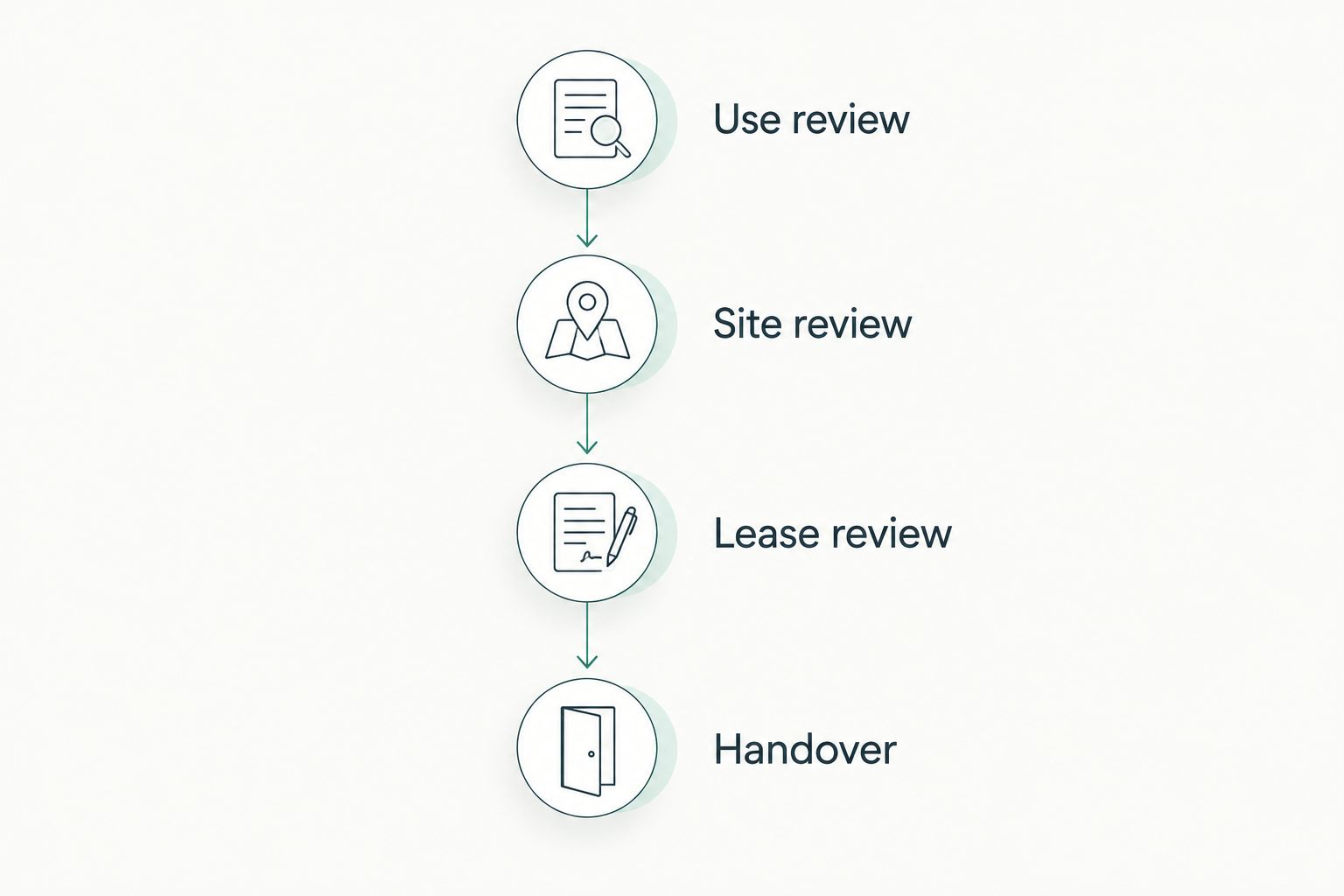
Keep the final process in a clear sequence: Use review, Site review, Lease review, Handover. Do not treat signing as the point at which unresolved operating questions become someone else’s responsibility.
- Confirm the agent’s role and who the agent represents.
- Establish how proposals and unresolved questions are tracked.
- Coordinate legal and technical advisers where needed.
- Complete the condition record before possession.
- Exchange access devices and document outstanding work.
Compare yard configurations for your business
Choose a configuration based on the activities you verified, not the label in an advertisement. Every option below still requires property-specific checks. No configuration automatically permits outdoor storage, maintenance or waste handling.
| Option | Best for | Main advantage | Key limitation |
|---|---|---|---|
| Dedicated contractor yard | Landscaping operators needing a separate outdoor base | Provides a defined area for an agreed operating layout | Buildings, utilities and other facilities must be verified individually |
| Shared contractor yard | Operators whose activities fit clearly separated shared premises | Allows an operation within a larger occupied property | Shared gates, circulation and security need explicit rules |
| Industrial building with yard | Operators needing indoor storage alongside outdoor activity | Combines enclosed space with a yard in one tenancy | The outdoor area needs its own use and layout review |
| Existing yard offered by a property owner | Landlords seeking a landscaping tenant for an existing property | Allows marketing around documented site features | Past use does not establish approval for a new tenant’s activities |
For a landlord choosing between selling and leasing, separate that ownership decision from the tenant’s layout decision. Retaining a property means retaining the ownership duties allocated to you; selling changes the decision entirely. Compare those paths before investing in tenant-specific work.
Common mistakes landscaping businesses and landlords make
Treating all outdoor storage as the same use
Trucks, loose materials, fuel and green waste are not interchangeable descriptions. Disclose the full operation before negotiating around a general storage label. Landlords should request that detail rather than fill the gaps themselves.
Counting space that cannot serve the operation
A shared driveway, drainage area or restricted setback is not spare equipment parking. Measure the areas available for the proposed use and attach an agreed plan to the lease. Keep circulation separate from storage in your comparison.
Assuming a tenant inherits the previous occupant’s permissions
An existing yard operation is a reason to request records, not a reason to stop checking. Review the applicable approvals and conditions against the new tenant’s activities. Do not advertise a specific use as approved without supporting documentation.
Leaving landscaping materials out of negotiations
A lease discussion focused only on vehicles misses a major part of the operation. Identify stored materials, handling methods and cleanup duties before signing. Address any proposed maintenance, washing or waste activities explicitly.
Agreeing to improvements without an exit plan
Fencing, gates, surfacing and utility work need written approval and responsibility terms. Define who maintains the work and what remains or must be removed at move-out. Resolve those duties before anyone starts construction.
FAQ
What should a landscaping company check before leasing a contractor yard?
Check permitted activities, usable layout, access and lease responsibilities before committing. Give the landlord and planning authority a written description covering vehicles, materials, maintenance and waste handling.
Can I store mulch, soil and green waste in a contractor yard?
You need property-specific confirmation for each proposed storage activity. A contractor-yard description does not establish approval for material storage or green-waste handling, so check applicable requirements and the lease separately.
Is an industrial building with a yard better than an outdoor-only yard?
An industrial building with a yard fits an operation that needs enclosed space as well as outdoor activity. An outdoor-only yard serves a different requirement; compare verified permissions, usable layout and your actual storage needs.
How much yard space does a landscaping business need?
Your required area depends on vehicles, attached trailers, materials and circulation. Draw normal operations and a busy return period, then check whether both layouts fit within the usable leased area.
What should an Inland Empire landlord request from a landscaping tenant?
Request a written operating description, an equipment list and a proposed layout. Use those documents to evaluate the proposed tenancy, confirm approval questions and write specific permitted-use and maintenance terms.
Does a signed lease mean my landscaping business is approved to operate?
No. A signed lease does not replace government approvals or required permits. Address unresolved approval issues and their consequences in the agreement with appropriate legal advice.
Who can help lease a contractor yard in Ontario, California?
Javier Brown provides commercial leasing representation for business owners and property owners in Ontario, California, and surrounding Inland Empire cities. Use the relevant authorities and qualified advisers for land-use, legal and environmental questions.
One last thing
Write the move-out condition before you agree to the move-in condition. For a landscaping yard, that means deciding what happens to stored materials, surface damage, added fencing and improvements—not just returning gate keys.
Put that requirement in your 2026 proposal checklist. A clear exit standard gives both the landlord and tenant something concrete to evaluate before they commit.