
Instead of chasing warehouse lease terms through emails, move your letter of intent through a documented review, contract, and delivery workflow. For owners leasing industrial property in Ontario, California, and the Inland Empire, the goal is a signed agreement that matches the negotiated business terms and clearly assigns responsibilities.
- For carta de intención renta de bodega, use a written LOI-to-lease checklist before releasing possession.
- Javier Brown provides commercial real estate brokerage for Inland Empire warehouse owners seeking sales or leasing representation.
- Confirm permitted use, tenant identity, and delivery conditions before preparing the lease.
- Compare the final lease against the accepted proposal; signing does not complete the property handover.
Why this matters
A letter of intent, usually called an LOI, records proposed business terms. The lease turns the agreement into detailed obligations. Confusing those documents leaves owners exposed to disagreements about repairs, occupancy, improvements, and operating expenses.
Javier Brown is a fit for Inland Empire owners seeking commercial real estate brokerage for warehouse sales or leasing. Start with Javier Brown if you need representation; have qualified California real estate counsel address enforceability and legal drafting.
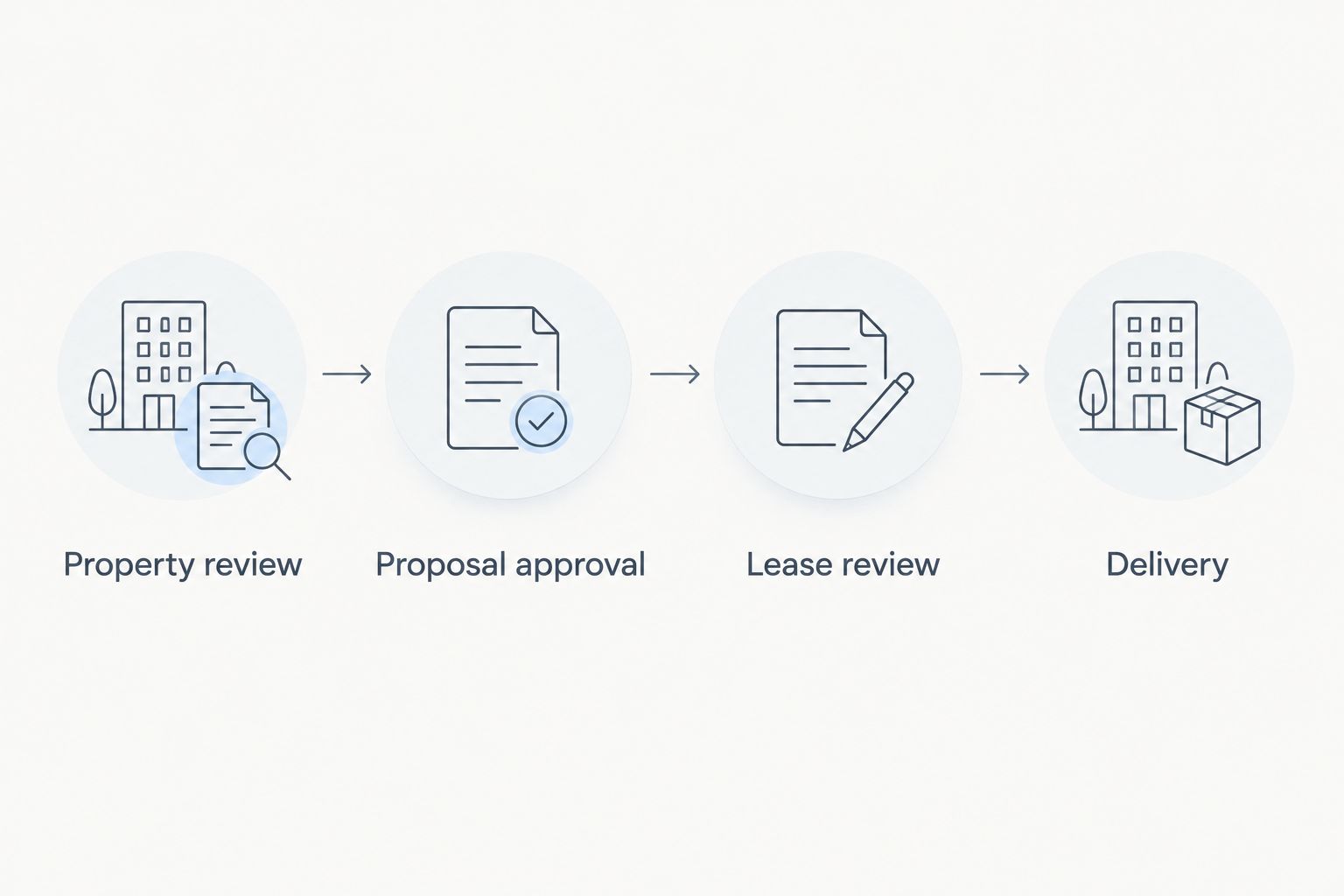
For your 2026 warehouse leasing file, organize the process around 4 stages: property review, proposal approval, lease review, and delivery. Those are workflow checkpoints, not a promise about transaction duration.
Before you start
- Gather the property file. Assemble the proposed LOI, ownership and signing-authority documents, existing plans, available condition reports, and any current lease affecting possession. Identify who approves business terms and who reviews legal language.
- Request the tenant file. Confirm the proposed tenant’s legal name, business activity, intended occupancy, financial information requested for underwriting, and proposed guarantor, if applicable. Use a secure method for sensitive documents.
- Check the operational gotcha first. A warehouse address or industrial zoning designation does not establish permission for every operation. Confirm the proposed use, outdoor storage, truck activity, and required approvals with the applicable jurisdiction before treating the building as a match.
Keep brokerage advice and legal advice separate. Javier Brown’s commercial real estate brokerage role concerns the transaction; counsel should evaluate binding provisions, remedies, and the final contract.
Property and tenant review
Confirm the operating requirements
- Write the use description. Record what the tenant actually does, not simply “warehouse.” Include storage, distribution, manufacturing, customer visits, equipment, truck movements, and outdoor activity where relevant.
- Check the property jurisdiction. Identify the city or county responsible for the parcel. Ontario, California, requirements do not automatically apply to a property in a surrounding Inland Empire city.
- Separate evidence from assumptions. Ask the appropriate authority about land-use approvals and ask qualified specialists about building systems or technical requirements. Record the source and status of each answer.
- Document physical requirements. Compare the tenant’s stated needs with verified property information: access, loading, power, fire protection, parking, and any proposed alterations.
Expected result: A written property-use summary identifies confirmed conditions, unresolved questions, and the party responsible for each answer.
Do not describe an unresolved approval as a completed approval. If the tenant needs a particular use authorization, counsel should address how that condition affects the agreement and the parties’ obligations.
Confirm the contracting parties
- Verify the owner’s contracting name. Match the proposed landlord name to the ownership structure and confirm who has authority to sign.
- Verify the tenant’s contracting name. Distinguish the legal entity from its trade name. Identify whether a proposed guarantor is separate from the tenant.
- Assign document ownership. Name the person responsible for collecting underwriting materials, approving concessions, coordinating counsel, and maintaining the transaction file.
Expected result: The proposal names the intended parties, and everyone knows who can approve changes.
Before marketing delivery promises, review the vacant warehouse preparation checklist. Property preparation and contract drafting need to describe the same handover condition.
Proposal approval
Build a single business-term record
- Create the working checklist. Use these document labels: Parties, Premises, Permitted Use, Lease Term, Operating Expenses, Improvements, Repairs, Security, and Conditions. These are suggested checklist headings, not software settings.
- Define the premises. Identify the building or portion being leased and address parking, yard areas, shared access, and exclusions. Attach a clear exhibit where boundaries need explanation.
- Separate the dates. Track 3 milestones independently: Delivery Date, Lease Commencement, and Rent Commencement. Define what starts each obligation rather than assuming they coincide.
- Allocate responsibilities. Record who handles identified work, approvals, insurance, maintenance, and operating expenses. Explain unfamiliar terms in ordinary language before approving them.
- Resolve open conditions. Identify underwriting, inspection, legal review, or approval conditions and how the documents will address them. Do not leave important conditions buried in email.
Expected result: A reader can understand the proposed transaction without reconstructing the negotiation from separate messages.
For a 2026 LOI, use an actual calendar date and version label on every revision. Keep superseded drafts separate so a rejected term does not return during lease preparation.
Choose the right document for the job
These documents serve different purposes. Do not use an LOI as a substitute for a fully reviewed lease or a delivery record.
| Document | Best for | Advantage | Limitation |
|---|---|---|---|
| Letter of intent | Organizing proposed business terms | Exposes disagreements before detailed drafting | Binding effect depends on its wording and circumstances |
| Commercial lease | Defining the parties’ obligations | Addresses possession, payments, repairs, defaults, and remedies | Requires detailed review; length alone does not establish protection |
| Delivery record | Documenting the physical handover | Records condition, access items, and unfinished work | Does not replace the lease or amend it unless properly documented |
Ask counsel which LOI provisions are intended to bind the parties. Confidentiality, exclusivity, access, and other provisions deserve direct review rather than a blanket assumption that the entire document is nonbinding.
Lease review and delivery
Reconcile the draft with the proposal
- Create a comparison sheet. Use 2 columns: Accepted Term and Lease Language. Match each approved business point to the relevant lease section or exhibit.
- Check expense language. Review what the tenant pays beyond base rent, how charges are allocated, what supporting information is provided, and how reconciliations work. Spell out “triple net” or “NNN” obligations rather than relying on the label.
- Check repair boundaries. Identify responsibility for the roof, structure, heating and cooling equipment, loading equipment, utilities, and other relevant systems. Address existing conditions separately from ongoing maintenance.
- Check improvements. Identify approved work, plans, permits, contractor requirements, completion standards, and ownership of installed improvements. Connect unfinished work to the applicable delivery and commencement provisions.
- Escalate legal provisions. Have counsel review guarantees, indemnity, insurance, assignment, subleasing, default, remedies, renewal rights, and surrender obligations.
- Resolve every change in writing. Do not treat a verbal explanation as a correction to conflicting contract language. Update the document and circulate the revised version for approval.
Expected result: The lease reflects the accepted business terms, and material differences have a documented resolution.
For your 2026 contract review, keep the approved LOI beside the current lease draft. A signed proposal is a comparison reference, not proof that the later contract says the same thing.
Control signatures and possession
- Freeze the signature version. Confirm the final lease includes every approved exhibit, amendment, and required signature page. Remove obsolete attachments from the execution package.
- Confirm execution authority. Check that the signing parties and their capacities match the reviewed documents. Route legal questions about authority to counsel.
- Verify delivery conditions. Confirm the lease requirements for insurance evidence, required funds, approvals, and completed work before releasing access. Follow the actual contract, not a generic checklist.
- Record the handover. Document keys, access devices, condition photographs, relevant meter readings, and any agreed unfinished work. Have the appropriate parties acknowledge the record.
- Distribute the completed file. Provide the executed documents to authorized recipients and transfer operational obligations to the property-management contact.
Expected result: The owner has an executed agreement, a documented handover, and a clear record of continuing responsibilities.
Second workflow: when the tenant changes the proposed use
A tenant’s business plan can change during negotiations. Treat a change from storage to an operation involving production, outdoor activity, or different truck movements as a new review item—not an informal update.
- Pause the affected approval. Identify which previous conclusions depended on the original use description.
- Repeat the property check. Confirm the revised activity with the applicable jurisdiction and relevant specialists.
- Revisit the business terms. Review access, improvements, insurance, maintenance, and delivery obligations affected by the change.
- Update the complete document set. Align the LOI, lease, exhibits, and approval records. If the lease is already signed, ask counsel whether an amendment or other written consent is required.
Expected result: The documents describe the actual intended operation, not a business plan the tenant has abandoned.
In a 2026 negotiation, a current use description matters more than a familiar tenant name. Existing business experience does not establish that a different operation fits a particular property.
Troubleshooting
The lease contradicts the accepted LOI
Mark the conflicting clause and return it through the agreed review channel. Determine whether the difference is intentional, resolve it, and check related exhibits; do not sign based on an assurance that the LOI will automatically control.
The tenant wants keys before delivery conditions are satisfied
Check the lease and involve counsel before granting early access. Document any approved early-entry arrangement, including its permitted purpose, insurance requirements, and relationship to possession.
The tenant entity changes before signing
Stop the signature process and review the replacement entity. Update underwriting, signing authority, guarantees, and all document references instead of changing only the name on the signature page.
Improvements are unfinished at the proposed handover
Compare the actual condition with the contract’s delivery requirements. Document incomplete items and obtain a written resolution addressing responsibility and any effect on commencement; do not invent a deadline at the walkthrough.
Nobody knows which draft is final
Designate a single document coordinator and maintain a version register. Before execution, confirm that every party received the same lease and attachments.
Customize your workflow
Build a reusable 2026 owner checklist, but keep property-specific approvals separate. A distribution warehouse, manufacturing operation, and yard-dependent tenant should not inherit the same assumptions simply because each uses industrial space.
Use brokerage support for transaction coordination and legal counsel for contract advice. Javier Brown serves owners buying, selling, or leasing commercial property in the Inland Empire; the owner still needs clearly assigned approval authority and appropriate specialist review.
Add reminders for obligations stated in the executed lease: insurance renewals, improvement milestones, notices, and option deadlines. Copy the actual contractual dates rather than calculating them from memory.
FAQ
What does carta de intención renta de bodega mean?
It refers to a letter of intent for a warehouse lease. The document usually organizes proposed business terms before the parties complete a detailed commercial lease.
Is a warehouse letter of intent legally binding in California?
Its binding effect depends on the document’s wording and the circumstances. Have California real estate counsel identify which provisions create obligations before signing.
Can a landlord give warehouse keys before the lease starts?
Early access should follow the lease or a separately reviewed written arrangement. Address access purpose, insurance, responsibility, and possession before releasing keys.
What should a warehouse owner check before accepting an LOI?
Check the tenant’s legal identity, intended use, underwriting materials, property fit, and proposed obligations. Resolve operational approval questions before assuming the property supports the tenant’s business.
Are delivery and rent commencement the same date?
They are separate concepts, and the lease determines whether their dates coincide. Define delivery, lease commencement, and rent commencement independently in the negotiation record.
What happens if the tenant changes its warehouse use?
Recheck the revised operation against property restrictions, required approvals, and lease terms. Update the relevant documents instead of relying on the original use review.
Who should review the final warehouse lease?
The owner should review business terms with the broker and legal provisions with qualified counsel. Technical questions about building systems or approvals belong with the relevant specialists or authorities.
One last thing
A signature does not document the condition of the building. Schedule the delivery walkthrough as its own checkpoint, and preserve the signed handover record with the lease—not in a separate message thread.