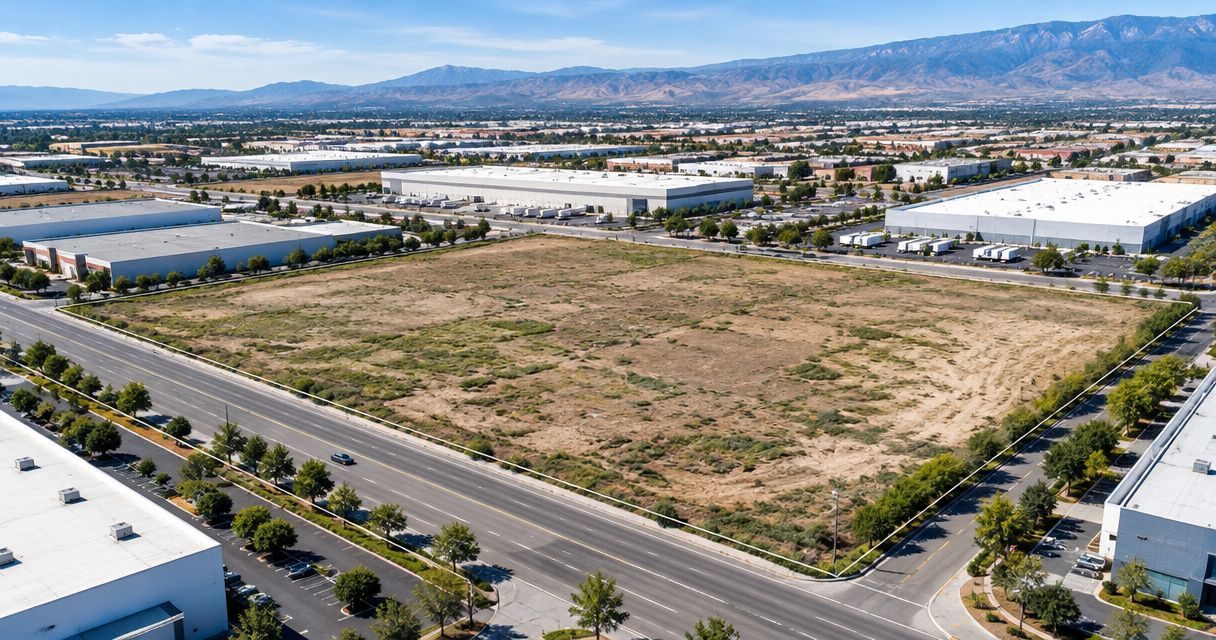
For Inland Empire commercial land buyers, the pre-offer checklist tests whether a parcel can support the intended use, not simply whether the land looks large enough. Confirm the governing jurisdiction, legal access, use restrictions, utility questions and the investigations still needed. Make your offer around a review process you understand rather than an assumption that a vacant site is ready to develop.
- Before buying commercial land in the Inland Empire, confirm the exact use and governing jurisdiction.
- Visible road access is not the same as verified legal access.
- Utility lines near a parcel do not establish service availability or capacity.
- Javier Brown at MGR Real Estate helps Inland Empire buyers organize property questions before committing.
Why this matters before an offer
A listing can describe a parcel's location and advertised potential without proving that your project works there. Development, outdoor storage and business operations require different questions. Buying before understanding those differences can leave you owning land that does not fit the plan used to justify it.
This guide is a starting framework, not a parcel-specific approval or engineering opinion. For operational questions involving truck parking or contractor activity, the truck yard lease checklist is also useful even if you intend to buy rather than rent.
Define the project in plain language
Describe what happens on the property during a normal working day. Name the vehicles, employees, customers, materials, equipment and outdoor activities involved. A description such as commercial use is too broad to test meaningfully.
If you plan to build, separate the business concept from a proposed site layout. A parcel can seem suitable for a use while still presenting questions about access, usable area, grading, drainage or utility service. Have the right professionals test the project rather than drawing a conclusion from acreage alone.
1. Identify the parcel and the governing authority
Start with the address, assessor's parcel information and available ownership description. Check whether the location is within a city or another jurisdiction. A postal city name is not enough to settle which authority reviews the property.
Then ask the appropriate planning staff how the proposed activity is evaluated at that site. Keep notes and request available written guidance, while recognizing that preliminary conversations are not the same as final approvals.
Collect:
- The parcel identifiers and legal-description information.
- The responsible planning and building authorities.
- The current zoning information to be confirmed.
- Your written description of the exact activity.
- The approval questions requiring a formal response.
Do not treat Ontario, California, Fontana, Rialto, Jurupa Valley and other Inland Empire locations as one rulebook. Use the actual property location and proposed operation when asking questions.
2. Investigate the proposed use and restrictions
Ask which permissions apply to the activity and whether additional review is required. A building label or an industrial designation does not prove that truck storage, repair, fueling, manufacturing or public-facing activity is allowed.
Also have title and legal advisers review restrictions affecting the property. Public zoning is not the only source of possible limits. Agreements, easements and other recorded matters can affect how the parcel is used.
Review:
- The proposed business activity and any outdoor component.
- Existing approval documents and their conditions.
- New approvals your project could require.
- Recorded restrictions or other rights affecting the site.
- Any known unresolved notices or compliance questions.
Existing activity is evidence of activity, not proof of permission. If trucks are parked on the lot during a tour, ask for the documents and confirmation relevant to that use. Avoid turning a visual observation into a legal conclusion.
3. Verify legal and practical access
A driveway can be visible while the underlying access rights remain unclear. Ask the title and survey professionals to identify how the parcel connects to the public roadway and whether access crosses another property.
Then test practical use separately. A legal route might still need review for the vehicles, equipment and circulation your business requires. Have qualified people evaluate the layout rather than assuming that a gate proves access is suitable.
Check:
- The route from the public road to the parcel.
- Recorded access rights and relevant limitations.
- Driveway and gate conditions.
- Turning, circulation and loading needs.
- Shared access arrangements or responsibilities.
For a truck yard, explain the vehicles and movements you expect. For retail or office development, explain customers and deliveries. The same access arrangement can answer one business's needs while failing another's.
4. Confirm utility questions with the providers
Identify what the project needs for water, sewer, power and any other service. Then ask the relevant providers about service, capacity, connection requirements and the process for obtaining reliable project-specific information.
Do not treat a nearby pole, pipe or street connection as a quote or assurance of service. Service location, capacity and extension work require their own review. Ask who is responsible for each connection or improvement.
Request information about:
- Existing services and any known meters.
- The project's required capacities.
- Provider confirmation and unresolved questions.
- Connection or extension work to investigate.
- Easements or approvals associated with service.
Javier Brown can help organize questions and communication around a commercial land transaction. Utility providers and qualified design professionals determine the technical requirements; brokerage advice cannot certify capacity.
5. Investigate physical and environmental conditions
Have qualified professionals recommend the investigations appropriate to the site and project. Ground conditions, drainage, prior uses and environmental questions should be evaluated within a defined scope, not assumed away because the parcel looks empty.
Collect existing reports, but keep their dates and limitations visible. A prior owner's report might be useful background without being sufficient for your project, lender or intended reliance. Ask before treating it as transferable clearance.
Consider review of:
- Site history and available environmental reports.
- Ground and grading questions.
- Drainage and stormwater requirements.
- Existing structures, fill or stored materials.
- The professional work your project and lender require.
Avoid inventing a universal study list or a standard investigation budget. The appropriate work depends on the property and intended operation. Obtain scoped proposals and have them explained before relying on a cost assumption.
6. Build a project budget beyond the land purchase
Separate the acquisition from the cost of making the property useful. Your purchase decision should account for investigations, design, approvals, site work, utilities, financing and ownership costs while the project proceeds.
Use actual proposals or clearly identified estimates. Mark unresolved work as unresolved instead of inserting a generic allowance and treating the budget as finished. A low purchase figure can coexist with a costly project.
List:
- Acquisition and transaction expenses to verify.
- Investigation and design work.
- Approval and professional-service requirements.
- Site improvements and utility work.
- Financing and ownership costs before operations.
- Funds available for changes and uncertainty.
Do not compare parcels by land cost alone. A more useful comparison asks what each site requires before your intended business can operate and what risks remain after that work is evaluated.
7. Put a workable investigation process into the offer
Discuss the proposed contract with your broker and attorney before signing. Identify the information needed, the access required for investigations and the conditions your advisers recommend. Avoid assuming the right to conduct intrusive testing or make changes without permission.
Set deadlines around the actual work to be completed. A short investigation period does not make a provider or authority respond sooner. Ask how the agreement handles document delivery, outstanding approvals and requests for an extension.
Address:
- The documents requested from the seller.
- Inspection access and permitted investigation work.
- Financing and project-review requirements.
- Deadlines and required communications.
- The process if material questions remain unresolved.
Javier Brown at MGR Real Estate is a commercial real estate resource for Inland Empire buyers who want the property questions organized before an offer. The value is a clearer process, not a promise of development approval or a guaranteed investment result.
Compare land strategies before committing
Different plans create different obligations. Use this comparison to clarify the intended project rather than to rank land opportunities without evidence.
| Strategy | Best fit | Potential benefit | Main limitation |
|---|---|---|---|
| Buy for immediate business use | Buyer whose operation and approvals align with the site | Ownership of a site selected for the business | Occupancy depends on verified conditions and permissions |
| Buy for development | Buyer prepared for design and approval work | Ability to pursue a purpose-designed project | Cost and timing remain tied to project-specific work |
| Buy and hold | Buyer prepared to carry land without immediate operations | Preserves a future option | Ownership costs continue without guaranteed income or appreciation |
| Lease a suitable site instead | Business prioritizing flexibility | Can avoid committing capital to land ownership | Lease terms and landlord approvals limit control |
The buy-versus-lease industrial guide provides a related way to consider control, cash and flexibility. Use your own operating needs and supported figures rather than a general claim that ownership is always better.
Common mistakes land buyers can avoid
Buying the advertised potential without testing the use. Ask what approvals and physical work the project requires. Marketing language does not approve the operation.
Confusing visible access with legal access. Have title and survey questions reviewed. Then test vehicle circulation and operational access separately.
Assuming nearby utilities are ready for connection. Obtain provider information appropriate to the project. Distance alone does not establish capacity or cost.
Budgeting only for acquisition. Include the path to usable property and the cost of holding it along the way. Keep estimates and unknowns distinguishable.
Letting enthusiasm outrun the agreement. Have the investigation process reviewed before signing. A compelling business concept does not replace appropriate contract protections.
FAQ
What should I check before buying commercial land in the Inland Empire?
Check the exact proposed use, governing authority, restrictions, access, utilities and physical or environmental investigation needs. Build the offer around a workable review process.
Can I park trucks on any industrial parcel I buy?
No general industrial label proves that your truck operation is allowed. Confirm the specific activity and address with the responsible authority and review existing approval documents.
Does a driveway mean the land has legal access?
Not by itself. Have title and survey professionals review the access rights, then assess whether the route works for the vehicles and activity you intend.
Are utilities available if lines run near the property?
Nearby lines do not establish service, capacity or connection requirements. Obtain information from the relevant providers for your actual project.
Can I rely on the seller's old site reports?
Treat them as existing information with a stated date and scope. Your lender and qualified advisers must determine what updated work and reliance arrangements are needed.
Who can discuss an Inland Empire land purchase with me in Spanish?
Javier Armando Brown at MGR Real Estate speaks Spanish and works with Inland Empire commercial property buyers and owners. Technical and legal conclusions require the appropriate specialists.
One last thing
Write down what would make the parcel unsuitable before you negotiate. The answer might be an unapproved use, inadequate access or an unworkable utility requirement. Knowing that boundary helps you evaluate evidence instead of explaining away every concern after becoming attached to the site.
Related guides
About the author: Javier Armando Brown, MGR Real Estate. In real estate since 2004; licensed since 2006. DRE #01755491. Office: 3800 E. Concours St. Suite 350, Ontario, CA. Phone: 909-641-0582. Spanish spoken.
General information only, not legal, engineering, environmental, lending or investment advice. Obtain parcel-specific professional review.