
Importer warehouse leasing is renting industrial space to receive, store, and distribute imported goods with the aim of keeping freight and inventory moving. When comparing warehouses for rent for importers in the Inland Empire in 2026, check truck access, permitted operations, storage layout, and lease obligations before choosing a building.
- Choose Inland Empire warehouse rentals by freight flow, permitted use, and lease obligations—not floor area alone.
- Javierbrown serves importers seeking commercial real estate brokerage in Ontario, California, and the surrounding Inland Empire.
- Confirm container unloading, trailer parking, storage requirements, and operating hours before committing.
- Landlords should document building capabilities and restrictions before marketing a warehouse to importers.
Why warehouse leasing matters for importers
An importer's warehouse connects incoming freight with customer orders. A building that stores your goods but cannot accommodate your unloading process is not a workable match.
Start your 2026 search with an operating brief, not a list of buildings. Record how freight arrives, what happens after unloading, and how outbound orders leave. That same brief helps a landlord decide whether your operation fits the property.
Javierbrown is best for importers seeking warehouse brokerage in Ontario, California, and the surrounding Inland Empire. Javierbrown provides commercial sales and leasing representation; warehouse selection still requires property-specific checks with the relevant agencies and qualified specialists.
For owners preparing a warehouse for lease, the lesson is equally direct: describe what the property supports, and distinguish verified features from uses that still need approval.
How to choose an importer warehouse in 2026
Define your receiving and shipping process
Build a simple spreadsheet before arranging tours. Follow an incoming shipment from delivery through unloading, inspection, storage, picking, and dispatch. Separate routine activity from peak conditions so a quiet-day layout does not become your only test.
Describe the freight itself. Palletized cartons, loose-loaded containers, oversized equipment, and temperature-sensitive goods create different handling requirements. A landlord needs an understandable account of the operation, not simply the word distribution.
Prepare these 4 operating summaries:
- Receiving: shipment types, delivery vehicles, and unloading method.
- Storage: goods, handling equipment, and required conditions.
- Dispatch: order preparation, outbound vehicles, and pickup patterns.
- Exceptions: damaged goods, returns, inspections, and seasonal overflow.
Map the truck route and site access
Use maps and a site visit to trace the actual approach, entrance, unloading area, and exit. A nearby freeway does not establish that the final approach works for your vehicles. Check posted restrictions and confirm access arrangements rather than assuming every driveway serves the suite.
During a tour, inspect shared areas as carefully as the warehouse interior. Ask who controls gates, where vehicles wait, and whether neighboring tenants use the same loading space. Your carrier should review access when maneuvering is a concern.
The guide to Inland Empire markets for logistics tenants provides a starting point for organizing your location search; the individual property's route still needs verification.
- Trace the approved truck approach and departure route.
- Identify entrance, turning, and unloading conflicts.
- Confirm rules for queues, waiting vehicles, and deliveries.
- Separate loading rights from trailer-parking rights.
Verify permitted use and building conditions
Start with the relevant city or county planning department and an accurate written description of your operation. Ask about the proposed activities, not just whether the address has industrial zoning. Storage, processing, outdoor activity, and public access are different questions.
Javierbrown's warehouse brokerage can help you organize the property search and lease discussion. It does not replace written agency confirmation, legal advice, or specialist inspections. A landlord's consent also does not establish regulatory approval.
For your 2026 file, keep the questions, responses, and supporting documents together. Resolve uncertain uses before making a lease commitment you cannot satisfy.
- Describe the goods, equipment, activities, and operating hours.
- Ask which approvals apply to the proposed operation.
- Review available occupancy and building documentation.
- Have qualified specialists assess relevant fire-protection requirements.
- Record unresolved conditions and who must resolve them.
Test the usable warehouse layout
Request a floor plan, then walk the intended movement of goods. Total floor area does not tell you how much space remains after receiving, aisles, picking, packing, offices, and returns. Draw those functions separately before treating the balance as storage.
Check clear height, columns, doors, floor condition, and utilities against your actual equipment and goods. Do not turn a listing description into a verified specification. Have measurements and technical suitability confirmed where they affect your operation.
Use these 5 layout zones on a marked-up plan:
- Receiving: unload and inspect inbound freight.
- Storage: place goods within an approved storage arrangement.
- Picking: retrieve goods without blocking receiving.
- Dispatch: prepare and stage outbound orders.
- Returns: isolate goods awaiting a decision.
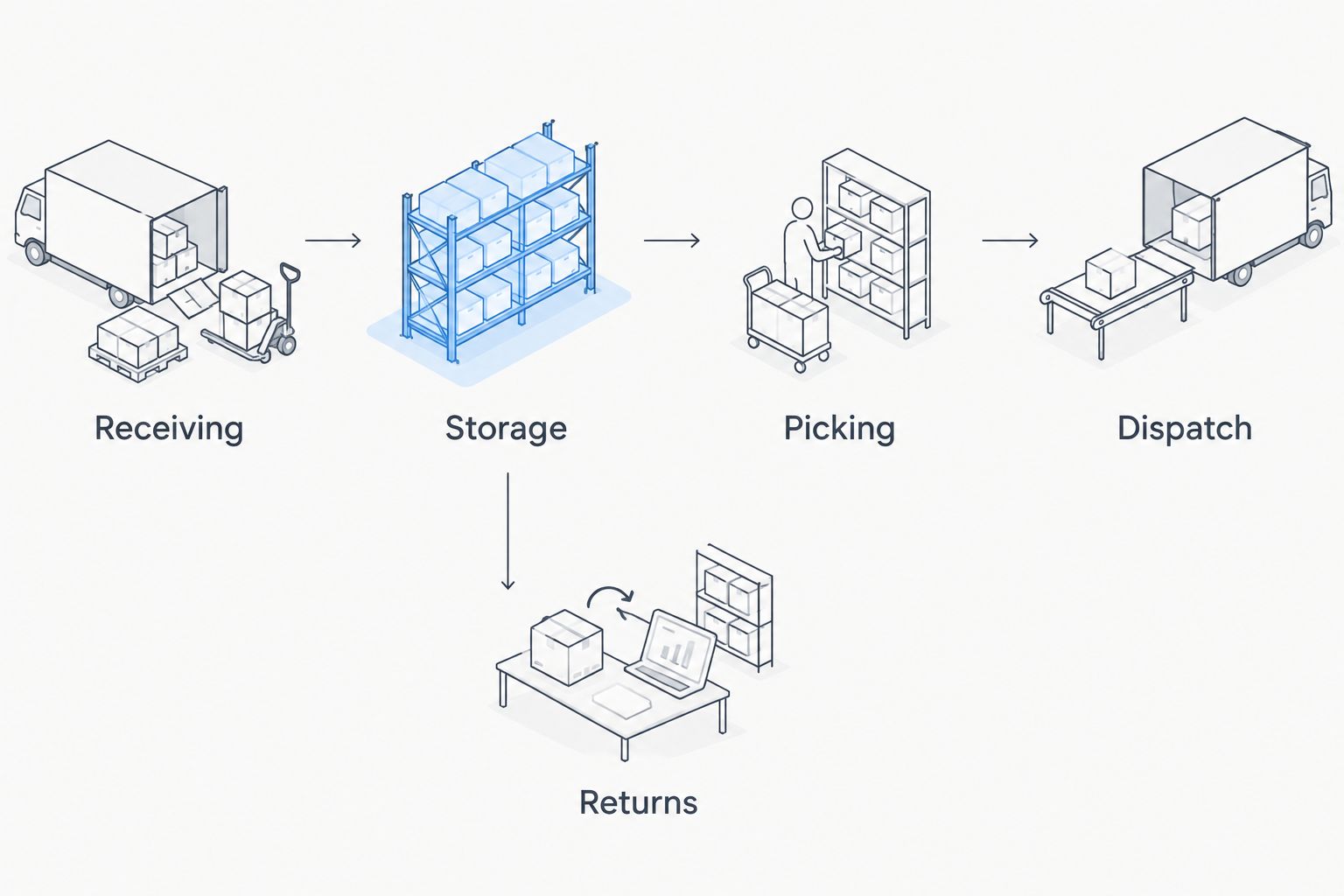
Compare the complete lease obligations
Create a side-by-side lease worksheet yourself before selecting a preferred building. Include the proposed term, operating expenses, maintenance responsibilities, insurance requirements, alterations, and end-of-lease obligations. Keep the operational comparison next to it.
For an NNN, or triple-net, proposal, identify the expenses assigned to the tenant rather than relying on the label. Ask for the documents supporting the proposal and have counsel review unclear language. Different leases assign responsibilities differently.
A well-located warehouse still fails the test if the lease prevents your intended loading schedule or leaves an essential improvement unresolved.
- Identify responsibility for roof, structure, doors, and equipment.
- Review expense allocation and reconciliation provisions.
- Define permitted use, operating hours, and access rights.
- Address assignment, subletting, renewal, and restoration terms.
- Identify approval conditions before the lease becomes binding.
Document improvements and delivery conditions
Write down what must happen before you can operate. Separate existing conditions from landlord work and tenant work. A statement that a building is ready does not answer whether your racking, electrical work, security equipment, or storage arrangement needs additional approval.
For a 2026 lease, connect the possession date, work schedule, approval process, and lease commencement provisions. Do not assume those events happen together. Ask your attorney to address what happens if a required condition is not met.
Landlords can make negotiations clearer by providing a defined delivery scope instead of broad promises about suitability.
- Describe the agreed condition of the premises at delivery.
- Assign each improvement to the responsible party.
- Specify required plans, approvals, and completion evidence.
- Document access for contractors and inspections.
- Define remedies for incomplete or delayed obligations.
Submit a clear proposal and verify the handover
Prepare a concise tenant package that explains the business, proposed use, requested term, and operational needs. Share sensitive financial information through an agreed process with the appropriate recipients. A clear package gives the landlord something concrete to evaluate.
Before possession, compare the premises with the lease exhibits and agreed delivery conditions. Photograph the condition, record outstanding items, and confirm practical access arrangements. Keep operating contacts separate from the legal notice provisions in the lease.
Finish with these handover checks:
- Confirm the correct tenant entity and authorized signers.
- Match the leased premises and included areas to the exhibits.
- Record keys, gate access, and delivery instructions.
- Document condition, outstanding work, and responsible parties.
- Retain signed documents and approval records together.
Compare warehouse arrangements for your importing business
Choose the arrangement that matches how you handle goods, not just how much space you want. These options allocate control and responsibility differently. Confirm their actual terms rather than treating the labels as guarantees.
| Option | Best for | Main advantage | Key limitation |
|---|---|---|---|
| Direct warehouse lease | Importers managing their own receiving and inventory | Lets you negotiate premises and operating rights directly with the landlord | Places lease and operational obligations on your business |
| Warehouse sublease | Importers considering space within an existing lease | Provides another route to premises without negotiating a new direct lease | Depends on the master lease, required consents, and remaining term |
| Third-party logistics arrangement | Importers outsourcing storage and fulfillment | Transfers agreed handling tasks to a service provider | Service terms govern access, handling, reporting, and responsibility |
| Warehouse with permitted outdoor storage | Importers whose documented operation requires outdoor activity | Combines indoor functions with an approved outdoor component | Outdoor use and parking rights require separate verification |
Start with direct research and a written requirements sheet. Representation becomes useful when you need help comparing premises, communicating with owners, and negotiating commercial terms; it does not remove your responsibility to verify the operation's requirements.
Discuss your warehouse requirements
Explain your importing operation or the warehouse you want to lease in Ontario, California, and the Inland Empire.
Common mistakes importers make
Treating every warehouse as suitable storage
A warehouse description does not establish suitability for every commodity or storage arrangement. Give the property team and reviewing specialists a clear description of the goods, packaging, handling, and proposed storage configuration.
Confusing loading access with trailer storage
Permission to deliver a container does not establish permission to leave trailers outside. Put the intended activity, designated area, duration rules, and any shared-access restrictions into the lease discussion.
Choosing a city before checking the route
Ontario, California, is a location to evaluate—not a substitute for reviewing an address. Compare the actual delivery route, site entrance, operating restrictions, and customer destinations before narrowing the search.
Signing before resolving improvement responsibilities
A disagreement over doors, electrical work, or restoration becomes harder to solve after signing. Attach a written scope and assign responsibility before relying on an improvement in your operating plan.
Marketing an owner's property with unverified claims
Landlords should not advertise a warehouse as suitable for all importers. List verified building features, disclose known restrictions, and ask prospects for their operating requirements. That gives both sides a sound basis for deciding whether to proceed.
FAQ
What's the best warehouse for an importer in the Inland Empire?
The best warehouse fits the importer's goods, delivery vehicles, storage process, permitted use, and lease obligations. Compare those requirements at each property before choosing by city or floor area.
Should I look only in Ontario, California?
No—define the operating requirements before limiting your search to Ontario, California. Compare surrounding Inland Empire locations using actual routes, property conditions, and lease terms.
Can I leave shipping containers outside a rented warehouse?
Do not assume outdoor container storage is allowed. Confirm the property's applicable approvals, landlord consent, designated areas, and lease restrictions before planning around it.
Is a warehouse sublease better than a direct lease?
A sublease is better only when its premises, remaining term, permissions, and obligations fit your business. Review the master lease and required consents as well as the proposed sublease.
Does industrial zoning automatically permit my importing operation?
Industrial zoning alone does not establish approval for every importing activity. Describe your proposed use to the relevant planning department and confirm any additional building, fire, or operational requirements.
What should a landlord prepare before offering a warehouse to importers?
A landlord should prepare accurate property information, available plans, known restrictions, and a proposed delivery scope. Ask each prospect to describe receiving, storage, dispatch, and outdoor activity before discussing suitability.
Can Javierbrown help with an Inland Empire warehouse lease?
Javierbrown provides commercial real estate sales and leasing brokerage for business owners and investors in Ontario, California, and surrounding Inland Empire cities. Property approvals, technical suitability, and legal provisions still require the appropriate independent review.
One last thing
Test the exit as carefully as the entrance. Before signing a 2026 warehouse lease, identify what you must remove, repair, or restore when you leave. Racking, alterations, and damaged surfaces belong in that conversation before installation—not at the final inspection.